
“My brother knows Karl Marx
He met him eating mushrooms in the People’s Park
He said what do you think about my manifesto?
I like your manifesto
I put it to the testo”
“Where’s Me Jumper?” – Sultans of Ping FC
An Irish punk song Where’s me jumper? once described the validation of a famous treatise against personal practice as putting a manifesto to the testo. Similarly, a collective response to the influential book The Manifesto for Teaching Online (Bayne et al. 2020) was recently published in the journal Postdigital Science and Education. The article sought to extend the conversations around digital learning that the Manifesto has helped engender. Here we reproduce excerpts from the article by two NIDL contributors who describe how they put the manifesto to the test in their own practice. The full article is available under a CC BY 4. 0 open access license:
MacKenzie, A., Bacalja, A., Annamali, D. et al. (2021) Dissolving the Dichotomies Between Online and Campus-Based Teaching: a Collective Response to The Manifesto for Teaching Online (Bayne et al. 2020). Postdigit Sci Educ https://doi.org/10.1007/s42438-021-00259-z
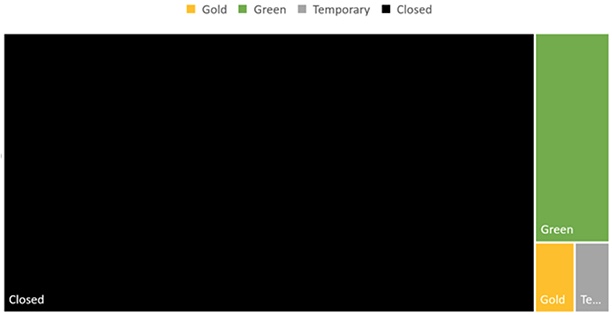
Reflections from the Time of Educational Closures and Openings (Eamon Costello)
As the world turned upside down in 2020, copies of The Manifesto for Teaching Online (Bayne et al. 2020) were furiously thumbed in search of pedagogical handholds. Debates about online teaching and all its components became critical. Terms like ‘remote emergency teaching’ (Hodges et al. 2020) may have contributed to the lexicon of online education as deficit but ultimately everything happened in the service of keeping students on their way. Campus was closed. Fortunately, we are not that campus. We are not the stones of the University. We are the people in and of it. We are the other campus. Campus was open. People were open, to ideas, to possibilities, and to creatively engaging with flipped reality.
Two particular provocations of The Manifesto — the entangling of openness with closures and the challenge to distance as deficit — caused me to reflect on my own educational practice. Education has many opens. For me, it has been the venerable tradition of correspondence and distance learning. To this lineage belong the thousands of distributed learners of Anna Eliot Ticknor’s 1873 Society to Encourage Studies at Home — which brought higher education to women to whom it was denied. Establishing the first correspondence school in the United States, Ticknor leveraged the technologies of the postal service and libraries to educate over 7,000 women across the country (Lee 2017). It evokes distance as the space we use to learn in and across.
Another open speaks of education as public good. Almost mundane concepts such as Creative Commons licensing help reduce friction of access to information at a basic level. If nothing else, its badges serve to remind us of the barriers, geo-locating firewalls, prestige boundaries, and privilege gaps that circumscribe and bind knowledge. Some access and equity gaps have been scored deeper during the pandemic. In fear some doubled down on prestige economies, putting their faith in price as a function of value.
But is access to knowledge, or the simple monetary price of this, even a fraction of our biggest problem? Do we look too much into ‘this fantasy of a weightless and untethered digital education?’ (Bayne et al. 2020: 13) Does the world really need more unfettered access to effusions of digital content? Is educational technology, as Selwyn (2016) harshly decried, already too ‘full of bulshit’? What if we over-share? Could we open onto unsafe epistemological areas (MacKenzie et al. 2020)? And if everything were free, easy, and open what would we struggle for or with?
Answers may lie in another open that unfolds or folds education — one rooted in the deep drivers of our teaching: open pedagogical practices. Such practices invite us ‘to be in the present, to remember that the classroom is never the same’, even when conventions may stress the opposite paradigm. It may now be precisely a time for renewal and rejuvenation of our teaching, the educational opening of our ‘minds and hearts so that we can know beyond the boundaries of what is acceptable, so that we can think and rethink, so that we can create new visions, celebrate teaching that enables transgressions—a movement against and beyond boundaries. It is that movement which makes education the practice of freedom’ (hooks 1994: 24). We are not the campus and educational openness does not depend on campus closures.
A Perspective from the Periphery: The Manifesto as a Welcome Sign (Prajakta Girme)

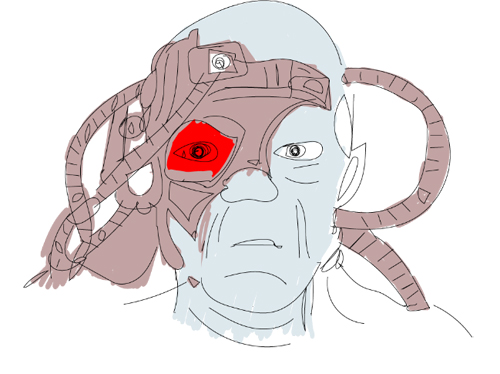
Fig. 1
I am from India and the politically charged atmosphere remains in the country, with alleged use of surveillance to root out dissent among the people (Perrigo 2021). The Manifesto for Teaching Online (Bayne et al. 2020) made me question where normalization of surveillance starts. Is it in the classrooms? Is it earlier with exposure to social media outside of it? Do universities add to this budding mindset of surveillance being the norm? Is it to the extent that people start accepting surveillance on a wider, social scale? The book has left me with questions but with those questions, it has given me words for expression of injustice and immorality. The questions that started through digital visibility in pedagogy have evolved to resonate at a very personal albeit political level.
The Manifesto centres its critical argument against surveillance in higher education on Lyon (2017: 835) observation that ‘surveillance ought not merely be of people … so much as for people – and thus be practiced carefully and held to account’. A surveillance society is one where surveillance is understood as being done to people by agencies. Surveillance culture, by contrast, is ‘widespread compliance with surveillance’ (Lyon 2017: 828). The book promotes dialogue, giving a common language with which to dissect, examine, and attempt to encapsulate the role of society heading towards a potentially problematic surveillance culture. In its argument of pedagogy, it highlights the greater ethical dilemmas of digital visibility where distrust is sown early in the student’s lifestyle perhaps making them more compliant to it outside of the university setting. Before we question the existence of surveillance culture, there are questions we should ask ourselves as part of a possible surveillance society; of what we might allow an institution to normalize and of what we might unwittingly enable enforcement.
As someone new to the field of education research, I felt at times crowded by convoluted, jargon-filled, cleverer-than-thou academic literature. The Manifesto for Teaching Online (Bayne et al. 2020) stood out for me as a lucid, accessible read. It practices what it preaches in its easy to comprehend, intelligible style. Personally, I have always thought that the veins of education run stale with confining, traditional approaches to teaching and learning.
As a child, I loved illustrated encyclopaedias. In that sense, The Manifesto resonated with me on multimodality. I contributed illustrations to academic articles (Costello et al. 2020; MacKenzie et al. 2021). The Manifesto encouraged me to push for a multimodal methodology for my PhD proposal, and I understood that varied forms of representation of academic knowledge were legitimate (Fig. 1). The book makes an argument for multimodality that rests on the disconnect between the traditionally text-centric channel of communication in research, and the world being studied, which ‘is visual, aural, tactile, multimodal, multidimensional, and polysemic’ (Andrews et al. 2012: 24). The Manifesto for Teaching Online critically probes at the burdens carried by the written word: ‘Text has been troubled’ (Bayne et al. 2020: xi).
Read more responses to the manifesto in the full article
And, of course, if anyone has found me jumper please let me know…
 Digital Learning Dispatches