
Last week, as part of the NIDL’s regular visiting scholar series, Dr Ibrar Bhatt from Queen’s University Belfast gave an invited talk on the topic of what it means to be literate in the 21st Century and different conceptions of digital literacies.  Ibrar’s talk was titled Researching Digital Literacies ‘From the Ground Up’ and discussed how there are often crisis narratives surrounding literacy, its relationship to technology, and what that means for our society. He also reminded us this debate is not new.
Centuries ago Plato (in Phaedrus) recorded Socrates’ objection to the practice and technology of writing, arguing that it would erode memory and cognitive functions, and have a negative effect on society. New approaches to education brought about by such things as increased digitisation and a newly lauded notion of ‘21st-century skills’ have re-invigorated old debates about what it means to be (digitally) literate and what this portends for education.
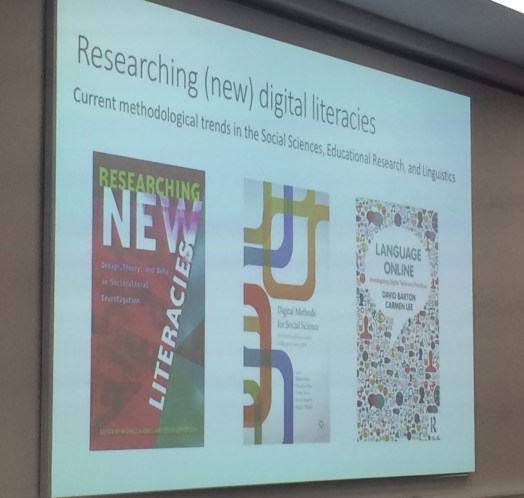
Ibrar described a ‘social practice’ approach to the study of digital literacy and how this framing can be used to better understand how we can research the area through a lens on student practices as the locus of inquiry. In argued that by examining digital literacies as they unfold at the level of localised practice, or ‘from the ground up’, we can gain a critical idea of how these practices relate to how technologies are positioned by learners, their teachers, and investors in educational technologies. These approaches afford a criticality that Dr Bhatt claims can help us rethink digital media in higher education.
 The event also served to mark the launch of a new National e-Learning Centre at
 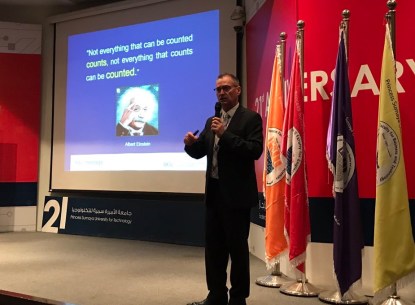 In his opening keynote address, Mark explores different quality models using an interesting ice-cream metaphor, which happens to be a Syrian delicacy that is popular and widely available in Jordan. Professor Brown will be a member of the International Advisory Board established to support the work of the new National e-Learning Centre.
 Digital Learning Dispatches