

By Clare Gormley
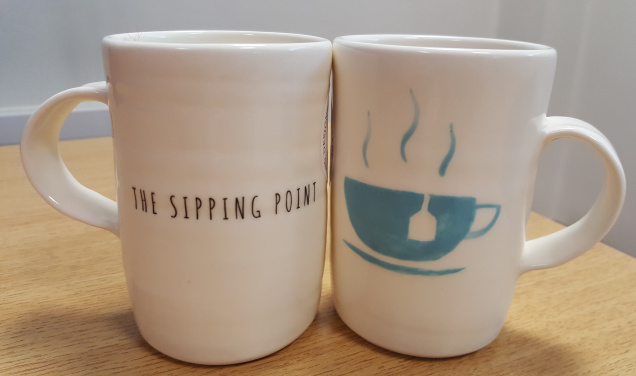
In this post I would like to share some early reflections on The Sipping Point community which recently started up at DCU. Drawing loosely on the concept of Wenger’s community of practice, the idea of The Sipping Point is to provide an opportunity for staff with a shared interest in teaching to interact with each other in a non-formal setting. The basic premise is to try to foster a climate where staff across all disciplines can potentially learn from colleagues about aspects of teaching practice. The result so far is a gathering of members who meet up for one hour once a month to hear about and discuss various approaches that peers are adopting in their teaching context.
Why this format?
Based on feedback and research into various academic professional development (APD) courses offered by our unit, (you can read more about those in Gormley, O’Keeffe & Ferguson (2017)), it is clear that not all staff can or wish to commit to the timeframes involved in our accredited offerings. Even for those who do complete these courses, there are limited opportunities for a cohort to continue their learning community and interact further once the module(s) have completed. Once-off workshops are also problematic since they don’t tend to engage lecturers deeply over a period of time. And I think it’s fair to say that we have also noticed a general lack of awareness of what other lecturing staff at DCU are doing that might be of value/interest across the academic community.
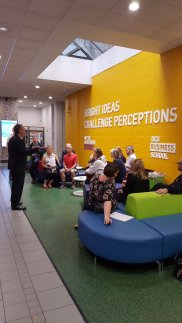 Hence The Sipping Point – a new avenue for like-minded souls interested in discussing teaching practice – came into being in April of this year, driven by an enthusiastic combination of positive change, collegiality and coffee. The general format is a one-hour session led by at least one lecturer presenting on a predetermined aspect of their practice for 10 minutes. After that, the topic goes open to the floor for general questioning and discussion. We meet at all three DCU campuses (Glasnevin, St Patrick’s and All Hallows) over the last week of the month.
You can read more about the Sipping Points initiative on “Learning Rush“, Clare’s Gormley’s personal blog.


 Digital Learning Dispatches