
By Orna Farrell
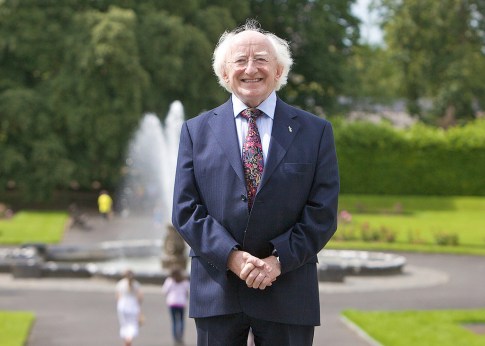
The short answer to the above question is yes! History still matters. This message is evident in President Michael D. Higgins speech earlier in the month where he voiced his concerns about the downgrading of history to an optional subject at secondary school in Ireland. The President stated that history is:
Studying history enables people to think and write critically, be aware of source quality and effectively interpret information. These are highly desirable skills according to the GradIreland 2015 survey of Irish employers, amongst the skills they highly prize are communication, analysis, working independently and the application of knowledge. In fact, the Irish National Strategy for Higher Education to 2030 describes critical thinking as one of the key characteristics of future graduates. This clear statement poses the question why are we downgrading school history in Ireland?
 Is History Stuck in the Past?
The digital revolution has not bypassed history which has embraced the potential of digital technology to democratise access to primary sources. In fact, the impact of technology, in particular, the digitisation of artefacts and historical sources has influenced and changed how we learn about the past. Over the past 30-years millions of primary sources have been digitised by libraries and archives and made available online. From an Irish context, in the lead up to the commemoration of the 1916 Rising, there was a major drive to survey and digitise relevant archival material.
These digitisation projects share a common ideal to make Ireland’s cultural heritage widely available to everyone and to enrich the historical narrative. The Decade of Centenaries has contributed archival developments such as the digitisation of the Bureau of Military History Military Service Pensions Collection.
The History Lab
These digitisation projects share a common ideal to make Ireland’s cultural heritage widely available to everyone and to enrich the historical narrative. The Decade of Centenaries has contributed archival developments such as the digitisation of the Bureau of Military History Military Service Pensions Collection.
The History Lab
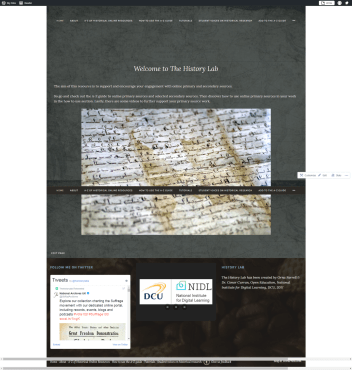 The recent digitisation movement has created a wealth of rich content for historians and history students. However, the sheer scale of online materials, websites and questions about source quality make it a challenging research environment for students. In response to this challenge, a team led by Orna Farrell and Conor Curran from the BA Humanities offered through the DCU Connected platform at Dublin City University (DCU) designed an open education resource (OER) called The History Lab.
The aim of the History Lab is to support and foster university students’ digital historical skills, with a particular emphasis on online primary sources. The online resource is made up of four elements: an A-Z guide of historical online sources, video tutorials, add to the A-Z, and student voices on historical research videos.
New Online Study Options
You can learn more about history and the “History Lab” by studying for a BA in Humanities online with DCU Connected. In our degree programme(s) students can explore a wide breadth of Humanities subject areas such as Psychology, History, Sociology, English, and Philosophy, while also specialising in at least one of the subject areas you find most rewarding and professionally valuable in a flexible part-time undergraduate degree. This new resource means there are relatively few barriers to enhancing your careers prospects through the range of opportunities available with a BA.
To Recap
History is still very much relevant in the 21st century. As President Higgins made abundantly clear in this response to the demise of the subject at secondary school level, historical skills such as analysis and an awareness of source quality are becoming more valuable, particularly in this era of fake news.
If you want further information about our DCU Connected online courses and programmes, then please contact us.
This opinion piece was originally published by Orna on her personal Linkedin site.


 Digital Learning Dispatches