If you work in academia this is the most important time of the year, with the new Semester starting and new students arriving, life on campus is mega busy! Last Saturday was our Welcome Day for our new DCU Connected students. The weather was kind to us, it was a beautiful Autumnal day and the Glasnevin campus was looking at its best. We had an amazing turnout of new students – this year around 400 participated in the Welcome Day and there was a real buzz to the place.

The Welcome Day is an important opportunity for our new online students to meet their programme chairs and tutors and to talk to other students. It is a way for them to feel part of DCU right from the outset – to feel “connected” wherever they study! We have students from across Ireland, and beyond, and of course not everyone was able to attend the Welcome Day. For this reason we also have a virtual equivalent suite of welcome resources for those students unable to join us.
 Saturday’s welcome included students studying our online Springboard+ courses mostly funded by the Irish Government, and we were delighted to also welcome our six new University of Sanctuary scholars. The NIDL team is very proud of our work in providing Irish refugees and asylum seekers scholarship opportunities to pursue higher education through DCU Connected. The Welcome Day, along with the Graduation Ceremony is one of the few opportunities we have to meet our students face-to-face
After refreshments and registration, we had a series of short talks introducing students to some of the services and supports available to our online students. Professor Gráinne Conole, the recently appointed Head of the Open Education Unit in the National Institute for Digital Learning (NIDL) started, providing an overview of the online learning environment, Loop and associated online resources designed to support student success.
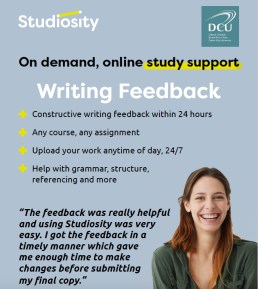 Of particular note is a new learning development service we are providing our online students this year from a strategic partnership with Studiosity, which offers two major features integrated within Loop: (i) a 24-hour formative feedback service to students on their draft written assignments, and (ii) the ability to connect outside of normal business hours with a study coach or subject expert via chat to provide just-in-time advice on learning activities and assessment tasks. We will evaluate this service over the course of the year to better understand how we can fully integrate new online tools and resources, such as Studiosity, as part of the DCU Connected experience.
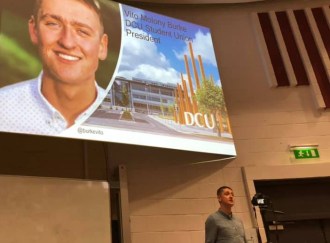
We were delighted that Vito Maloney Burke, the DCU Student’s Union President, was also present to welcome our new students. He gave an engaging and enthusiastic talk on what the Student Union could provide for DCU Connected students. Of particular note is the fantastic new Student Centre, the ‘U’, which was officially launched last Thursday by President Michael Higgins and DCU’s own President.
Student Support and Development (SSD) had prepared lovely welcome packs, which included lots of goodies, including a very nice diary. Annabella Stover, Deputy Director of Student Support and Development (SSD) and Karina Curley (Student Learning) then outlined the various services SSD provide.
This includes Discover DCU – a series of 8 interactive online courses to help new students get orientated with DCU. They outlined how SSD provides three levels of support: personal, professional and academic. SSD has a presence on both the Glasnevin and St Patrick’s campuses, and support and advice are available both face-to-face and online. Annabella also announced a new 24/7 online counselling service available to all DCU Students. In addition, students can access medical support, there is both a nurse and doctor on campus. There is also careers advice, which includes support for writing CVs/job applications, career fairs and access to an online job vacancy facility. Other services available to our online students include disability and learning support, writing and study support, and a writing centre.

After this formal opening students had the opportunity to learn more about their specific programme of study and to meet their course chairs and tutors and chat with other students. These sessions provided an overview of the modules, an indication of the amount of study time required, pointers to useful resources and support, and an opportunity to hear from existing students.

It was a fantastic day, it was lovely to see the students so enthusiastic and excited about starting their new courses. It also provided us with an opportunity to talk to the students and to reassure them on any concerns they may have had about their course and studying online through DCU Connected. We look forward very much to engaging with our DCU Connected students via Loop – our online learning environment – and to see them develop and progress through their programme of study.