
We are pleased to report that we have some exciting redevelopments underway to our current work and learning spaces.
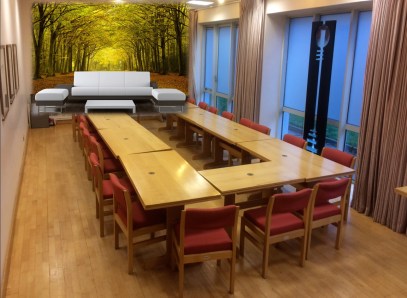
Phase 1 of this work involves the Teaching Enhancement Unit (TEU) relocating to the ground floor of the Bea Orpen building.
The relocation will help to make the TEU team far more accessible to DCU staff and involves the development of a new “Talking Points” space where people can drop in to us at any-time to discuss ideas and new opportunities to enhance the teaching and learning experience. After internal negotiations we have successfully managed to acquire DG11 for this purpose, which was used previously by the University as a large meeting room.
 New external signage will help to make this space highly visible to the university community and the room has the advantage of being directly opposite the space we currently use for professional development workshops.
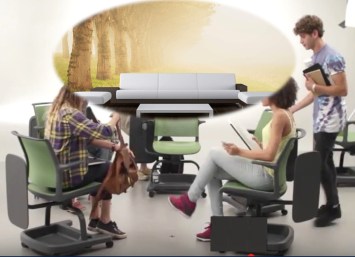
Phase 2 of the redevelopment work will focus on refurnishing this adjoining teaching room with mobile chairs, contemporary furniture and updated learning technology to make this a flexible discovery space.

In the meantime, Phase 1 also involves the development of a new “maker space” where we are currently converting a relatively large room, which was previously used by several groups for storage purposes, to create a modern digital media studio.
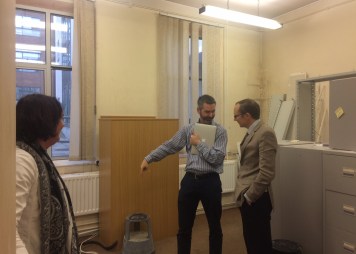
This space will be equipped with the latest digital technology and offer several different stages and backdrops for the production of a range of teaching-related videos. After considerable research the aim is to support a diversity of genres and importantly avoid the default trap of simply producing traditional ‘talking heads’ videos.
 Another dimension to Phase 1 of the redevelopment work is relocating our newly established “Ideas Lab” to the first floor extension. Under the leadership of Associate Professor Mairéad Nic Giolla Mhichíl, this year we have already appointed three new staff to The Ideas Lab and more people will be joining the team shortly, including a number of doctoral students, to work on several innovative projects supported with external funding. We will post more information about some of these projects over the next few months.
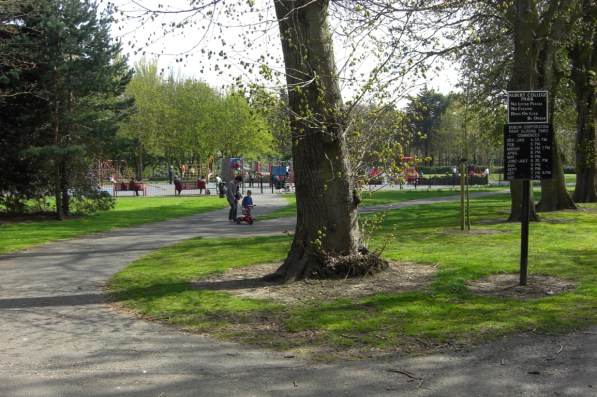
A strong and common theme running throughout the above redevelopments is the concept of flow. This concept is an important design principle in contemporary literature on learning spaces. To this end we have adopted an ecological metaphor by taking inspiration from Hamstead Park directly opposite the Bea Orpen building. The plan is to incorporate within our interior spaces a number of features and several large images taken from the park as wall art to help create different habits for working and learning. Our intention is to encapsulate the sense of creativity and discovery that comes from exploring the park.
Phase 1 of this work should be completed before Christmas and we will formally launch our new spaces and relocated units in the new year.
 So, there are clear economic benefits to having a BA, but there are also personal and societal benefits, these are evident in the latest American
  Digital Learning Dispatches