
As Ireland’s first formally designated University of Sanctuary, DCU is pleased to annouced 10 Scholarships for Irish-based refugees and asylum seekers to support online study through DCU Connected. The DCU Connected University of Sanctuary Scholarships cover the costs for an online undergraduate or postgraduate programme of study (up to 60 European Credit Transfer System (ECTS) credit points) which can be shown to clearly benefit recipients in advancing their personal and professional goals. In this respect the DCU Connected University of Sanctuary Scholarships are intended to be truly transformative, says Professor Mark Brown, Director, National Institute for Digital Learning.

What Can You Study?
Applicants can apply for a Scholarship for online study to:
– complete 60 ECTS credit points (or less) for a full qualification (e.g., Certificate in Information Technology; Certificate in Software Systems & Entrepreneurship); or
– complete 60 ECTS credit points towards an undergraduate or postgraduate qualification (e.g., Diploma, Degree, Masters).
 The DCU Connected website contains the list of online courses and programmes available to select from under this category of University of Sanctuary Scholarships.
Application Process
There are three steps to the application process:
Step 1 – Expression of Interest Form (Click on this link)
The first step involves submitting the initial Expression of Interest Form to establish your eligibility to apply for the scholarship. As part of this process all applicants will be required to provide evidence of their ability to meet the English language requirements for studying at DCU. The deadline for submitting this form is Monday 14th August, 2017.
Step 2 – Full Scholarship Application Form (Click on this link)
If your initial expression of interest meets the elibility criteria, then the next step is to prepare and submit the Full Scholarship Application Form. The deadline for submitting this form is Monday 21st August, 2017.
Step 3 – Formal Registration
All applicants will receive feedback on their applications and if you are successful in being awarded a DCU Connected Scholarship, then the next step is to formally register for your chosen programme of study. Once all the relevant documentation has been processed you are ready to embark on what we hope will be a transformative and life changing experience as you study through DCU Connected.

Further Information
If you require further information about the DCU Connected University of Sanctuary Scholarships, then please email our Scholarships Co-ordinator, Colum Foley, <colum.foley@dcu.ie>.
Also when thinking about applying to study online we encourage prospective applicants to complete the “Am I Ready for Study?” online quiz and the “Do I Have Enough Time?” calculator. These tools, and others on the same website, may be useful in helping you to reflect on your decision to undertake further study.
 This is one of the largest conferences of its type in the United States organised by the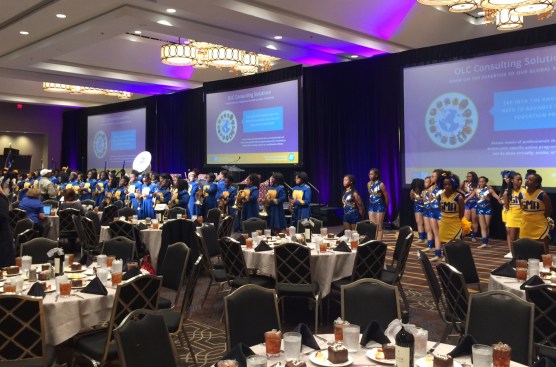
 After describing each sin, Mark argues that when it comes to structural innovation we need to break free from the institutional shackles that limit our imagination.
 Digital Learning Dispatches