

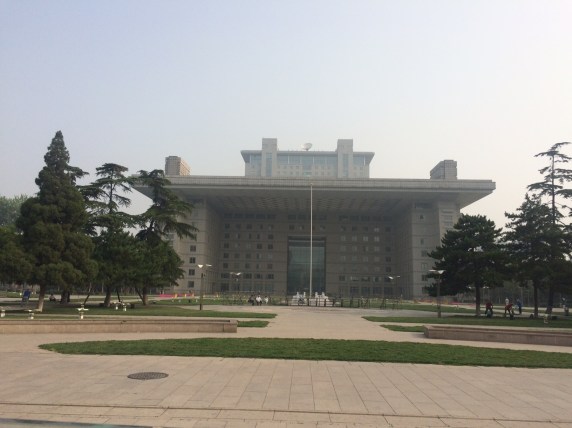
In June 2016, a small DCU delegation visited China as part of an externally funded collaborative research project with the Big Data Centre for Technology Mediated Education at Beijing Normal University. The project known as BigEdData is exploring how the Massive Open Online Course (MOOC) movement is being represented through social media. More specifically, the project involves critical discourse analysis relating to the discourses playing out in social media such as Twitter and who is engaging in them. The study is situated within a wider critique of actor-agency and the notion of power and politics in discourses of social media and in learning.
A variety of network and social analyses will be employed in the empirical analyses to model the actors and their characteristics within the dataset. The dataset was created by downloading tweets from public twitter in 2015 using #MOOC and the keyword MOOC as an organizational and selection filter. Research on the proliferation of articles and news stories relating to MOOCs in traditional and online media has been conducted by a number of authors, including a team in the NIDL.
During the visit to Beijing Normal University several talks and more formal presentations were offered on a range of topics, including the one above on the messy construct of learning analytics. A preliminary paper on the BigEdData project was presented at the EDEN conference in Budapest in June, as outlined in the slide-deck below. Further presentations are planned over the course of 2016.

 Digital Learning Dispatches