
By Dr Mairéad Nic Giolla Mhichí
As the children came to the door, this Halloween trick or treating dressed as ghouls and witches, I wondered how many of them know about the origins of Halloween or Samhain as it is known in Celtic and Gaelic Cultures? Samhain translates as the last day of summer and marks the start of Winter in the Celtic Calendar. Celts believed that the Spirit world was closer during this time and that it was easier for the faeries (sióga) or ghosts (púcaí) to cross back into our world. They were welcomed by the Celts, were prayed for and even had a place set for them at the celebration table to ensure a good harvest in the coming year!

Our Gaelic ancestors had little difficultly in dealing with the notion of the seamless movement between the spiritual and the so-called real worlds. I think they would have enjoyed our virtual or online world as it blurs into all aspects of the canvas of our everyday lives. It is fitting, therefore, in this most Celtic of months, that registrations are open for DCU’s first MOOC, Irish 101: Irish language and culture on the FutureLearn platform. The MOOC is one part of the Fáilte ar Líne (Welcome on Line) programme, co- funded by the Department of Culture, Heritage and the Gaeltacht as part of Twenty Year Strategy for the Irish Language. The Fáilte ar Líne team based in the NIDL Ideas Lab, and is working with Fiontar and Scoil na Gaeilge (DCU’s Irish language-medium School) to develop this course and a wider suite of offerings in the Irish language and culture which will be available online and therefore, globally.
This initiative is part of a national, concerted effort to develop and enhance the Irish language and culture’s presence in the online space. It provides the opportunity for the global Irish diaspora to connect with Ireland and more importantly for Ireland to remain connected in them. It allows people interested in our Irish language and culture to engage in learning and more importantly to meet with like-minded people from across the world. It also provides an opportunity for those who are currently learning or teaching Irish to connect with others and to be part of a larger globally, supported-community and meitheal (people working together).

Dublin City University (DCU) is leading the Fáilte ar Líne project on behalf of the Irish Government but we are fully aware that we cannot or indeed should do this alone:
Put simply, this means we rely on each other, as the Celts did at harvest time. As such DCU hopes to work with partners and networks nationally and internationally to deliver on this ambition – we have already started to make these connections. There is a wealth of experience and expertise globally, within institutions and local communities. We do not want to reinvent the wheel, or to replicate or to take away from what is currently being done. But we can enhance it by working together to provide a comprehensive online space for learning and engagement with Irish language and Culture. Ultimately by working together we may deliver on Séamus Heaney’s view of the importance of learning Irish:
Not to learn Irish is to miss the opportunity of understanding what life in this country has meant and could mean in a better future. It is to cut oneself off from ways of being at home. If we regard self-understanding, mutual understanding, imaginative enhancement, cultural diversity and a tolerant political atmosphere as desirable attainments, we should remember that a knowledge of the Irish language is essential in their realization –.
We are looking for partners who can connect in and also connect out i.e. those who would like to actively collaborate with us on courses and programmes etc. and also to those who provide local support for Irish language and cultural learning for learners and teachers. Please do connect with the DCU team if you or your institution/network would like to participate, email failtearline@dcu.ie or if you are interested in providing support to realise the ambition for the Irish language and culture please contact me directly mairead.nicgiollamhichil@dcu.ie


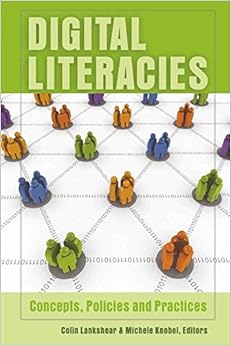 As Lankshear and Knobel (2008) wrote in their seminal book on the topic, ‘the most immediately obvious facts about accounts of digital literacy are that there are many of them and that there are significantly different kinds of concepts on offer’ (p.2). For this reason it helps to talk of digital literaciesrather than limit our thinking to a singular all-inclusive definition. It also needs to be noted, as illustrated above, the language of digital literacies in both the popular and more scholarly academic literature is often described using different terms—such as, digital skills, digital fluency, digital capabilities, digital competencies, digital intelligence, and so on. Therefore, the differing nomenclature makes the search for a commonly agreed definition or understanding of digital literacies even more elusive.
 Digital Learning Dispatches