Higher Education 4.0: Exploring Big Questions to Shape the Future

What is your vision of Higher Education by the year 2030? What are the big questions we need to be thinking about in shaping the post-pandemic world for Higher Education? What are the major challenges and opportunities facing universities over the next decade? Who will get to shape the future environment and whose voice is missing from efforts to reimagine Higher Education in response to Industry 4.0?
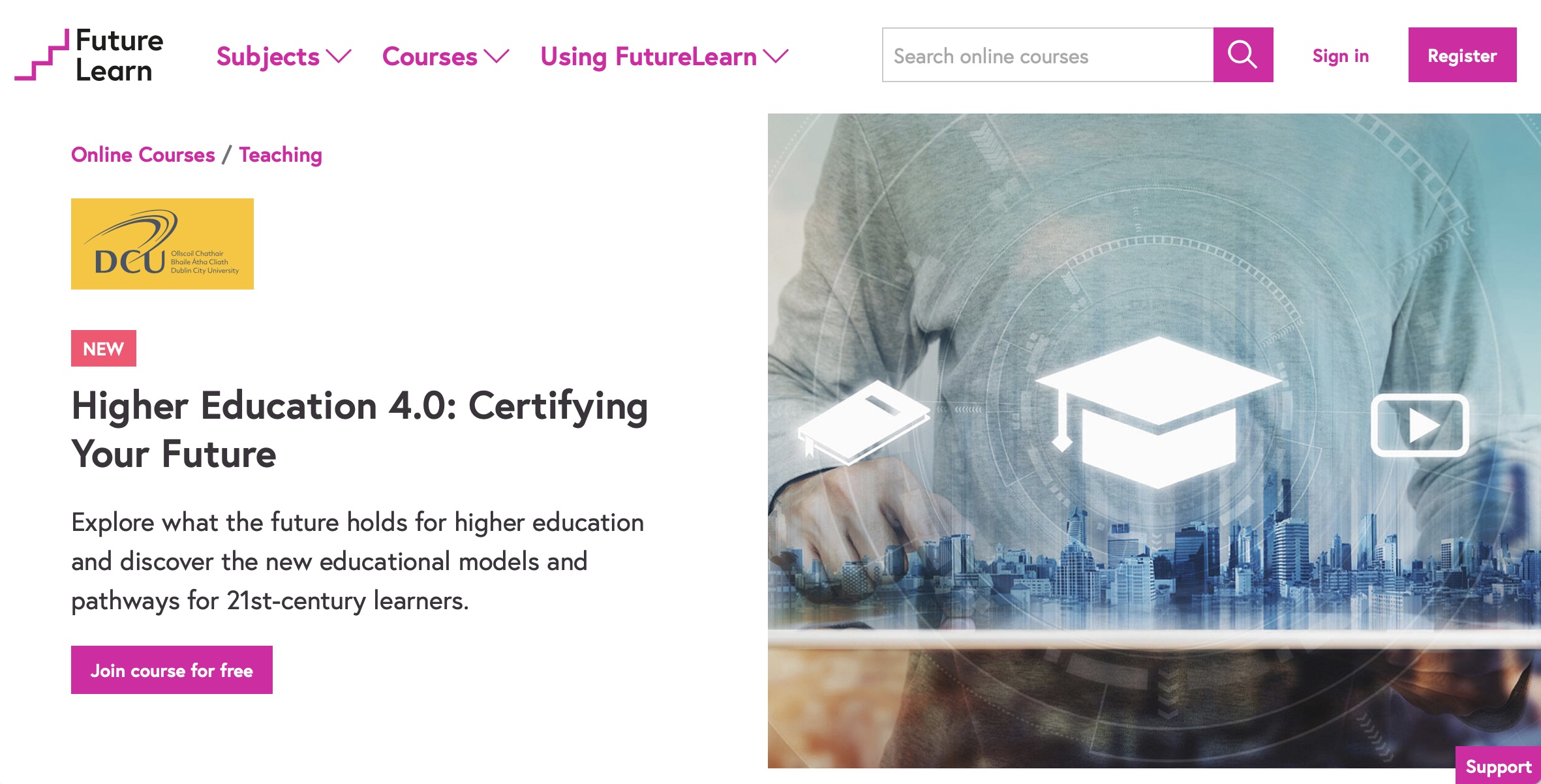
Our new online masterclass starting on March 8th explores these questions and more. In Higher Education 4:0: Certifying Your Future we take a closer look at the future skills agenda, the rise and the rise of the micro-credentialing movement, and how we can harness new pedagogies for new times.

The masterclass offered over 3-weeks through the FutureLearn platform begins by establishing why universities and other educational stakeholders need to engage with the future skills agenda.

We explore the future of work along with the increasing focus on transversal skills, and in doing so attempt to answer a number of key questions: 

  • What are future skills?
  • Why are they important?
  • How can they be measured? 
World Economic Forum, 2020

In Week 2, we look at the new possibilities and challenges micro-credentials offer for certifying the future.

This rapidly evolving approach to accredited learning and continuing professional development has the potential to redefine Higher Education and the traditional credential ecology, which arguably is a legacy of the 20th Century that may no longer be fit for purpose.

We will explore a number of the different micro-credentialing initiatives around the globe profiled in the Micro-Credential Observatory, including a recent ECIU white paper and the European Commission’s groundbreaking work in this area, and in doing so try to answer several key questions:

  • What are micro-credentials? 
  • Why the growing focus on them?
  • Are they just another passing educational fad?
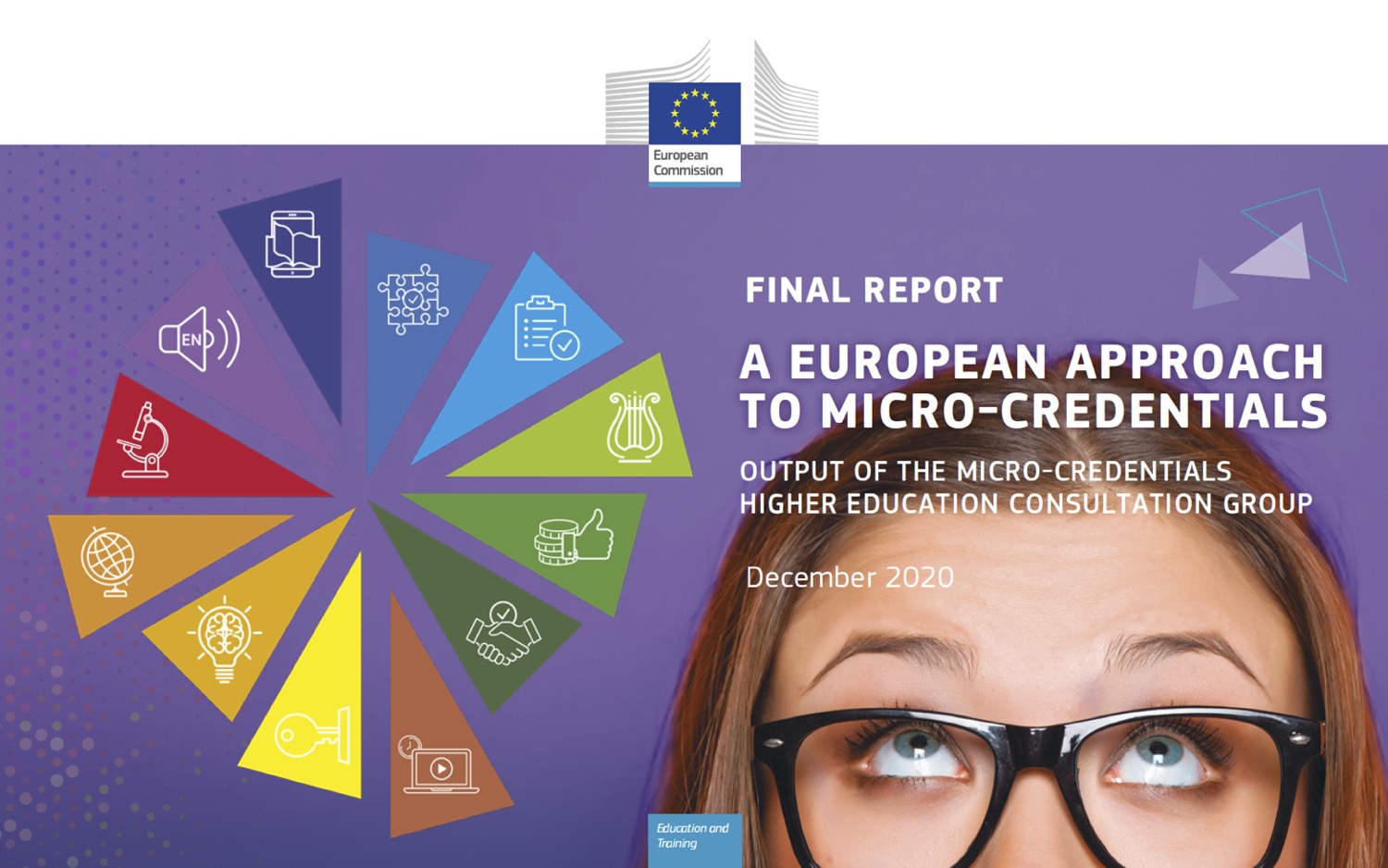
European Commission, 2020

In Week 3, we explore how the future skills agenda and micro-credentialing movement may be able to support new authentic forms of pedagogy that help to develop more active citizens, lifelong learners, and innovative work-ready graduates. More specifically, we discuss the value and transformative potential of new approaches such as Sprints, Hackathons and Challenge-Based Learning (CBL) and how they can be intentionally designed to harness the pedagogical affordances of new digital technologies. We will share a number of case studies, including how CBL is being adopted by the new ECIU University as a “signature pedagogy” to support more impactful and real-life learning; and in doing so endeavour to answer a number of key questions: 

  • What are authentic pedagogies?
  • What do we already know about learning?
  • How will Higher Education 4.0 impact future pedagogy?
We have been told for over a decade that today’s universities and colleges are at risk of preparing a new generation of students for jobs that don’t yet exist, using old fashioned teaching methods, and out of date technologies.

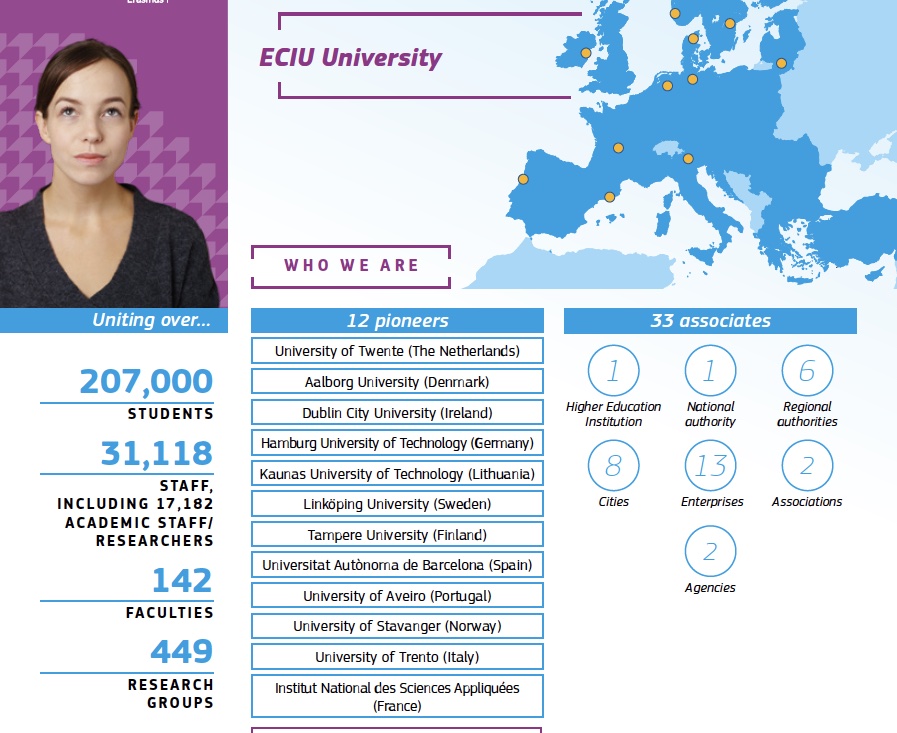
This free online masterclass, supported by and developed under the umbrella of the new ECIU University initiative, gives you the opportunity to debunk, challenge and/or add your own perspective to some of the current debates about the future of Higher Education.

We hope to raise your critical awareness of major change forces influencing the future, and provide useful examples of how different institutions and/or organisations are responding to the new global Higher Education environment. Participants can engage in a number of ways. Some people may wish to work through each topic on their own at their own pace, or alternatively as part of a group of educators from their own institution. Keep in mind that FutureLearn is a social learning platform and so the masterclass is designed to promote your active participation.
Our NIDL team at Dublin City University (DCU) will be facilitating your learning over the 3-weeks but we don’t have all the answers. Accordingly, the masterclass endeavours to be highly interactive throughout each week as we “open the floor” to your contributions.

We hope you can carve out some time in your busy calendar in March to contribute to Higher Education 4.0 as we discuss some of these big issues. You can learn more about the topics we cover and register for the masterclass on the FutureLearn website. We hope to see many of you online!

A Digital Edge: Week 2 Reflections – Learners Better Prepared to Thrive Learning Online

We wrapped up Week 2 of A Digital Edge: Essentials for the Online Learner at the end of last week. By the end of the week almost 5,000 learners from across the globe had registered to enhance their online skills set against a wider context of life skills and the LifeComp Framework as colleges and universities explore the potential of online, hybrid and blended models of teaching and learning.

A Digital Edge: Life Skills Framework

After a strong start in the first week, in which learners reflected on their experience and noted a shift in their feelings towards online learning from “anxious” to “confident”, the second week continued the steady growth in the level of interest and engagement. As a socially-focused course, it was rewarding to see comment sections brimming with observations, experiences and advice from people as they progressed through the week’s “Ways of Thinking” and “Ways of Working” sections.

While the first week focused on starting with the right mindset and laying down foundational principles for learning online, Week 2 shifted the focus to some more practical aspects with “Tools for Working” and “Tools for Thriving”. Kicking off with a quiz on “What are you concerned about?” to help our team of facilitators to better understand the needs and concerns of learners, Week 2 then moved ahead to address some of those challenges in “Tools for Working”. This included handling issues around getting connected, avoiding the “shiny new toy” syndrome to get organised, creating plans and to-do lists, accessing appropriate tools for different activities, and getting into the habit of backing up data.

“Tools for Thriving”, the last section of the course, had a mix of articles, videos, polls and student advice that all stressed the importance of digital well-being and social interaction. The step “Think, Reflect, Think!” introduced the idea of becoming a ‘thriving’ citizen by honing one’s critical thinking skills and civic engagement with an open mind. Spotting fake news and avoiding its spread was highlighted in the ‘Beware!’ section, which sparked a lively discussion in the comments section.

As the course comes to an end, a poll under the step ‘A Worry Shared’ was conducted to determine which aspects of online learning people were most concerned about. Here are the results of this poll so far…

Which of the following aspects of online learning are you most concerned about?

Almost half of the learners (43%) said they were most concerned about staying focused and self-motivated. The next highest group, a little over one in four learners (27%) said they were concerned about the lack of social interaction. Organising group work/study sessions and limited access to lecturers/tutors were the next highest concerns, followed by lecturers’ experience in online teaching.

Notably, 6% of course participants said they were concerned about internet speed/availability and 2% about access to computers/technology, reflecting the need for institutions and governments across the world to upgrade their internet infrastructure for the benefit of higher education in the ‘new normal’.

It was good to see that learners embraced the message of the need to collaborate with others and support fellow learners. Here’s a good example of learners participating in the course already starting to help out each other in their online learning journey…

After an Orientation Week webinar with students at Dublin City University (DCU) taking the course, it is pleasing to see that over 700 have already completed the course and uploaded their FutureLearn Certificate onto their MyDCU portal. The level of uptake at DCU demonstrates the value of this type of course when it is fully embedded like this as part of the student welcome and orientation experience. We were also pleased that DCU’s President, Professor Daire Keogh has a final video at the end of the course to wish everyone all the best for their online study over the remainder of the year, and beyond.

Overall, the general feedback on the course in the final section was overwhelmingly positive. Most learners appreciated the social nature of the course, the reflections at the end of each step, and the ability to learn from other learners’ advice. This was a key aspect of the course design. Most of all, they found comfort in finding a community of learners who felt like they were in this together: journeying from ‘anxious’ to ‘confident’, ‘concerned’ to ‘excited’.

As Christiaan said…

This course really brought it home to me that we’re all in the same boat! That really helps with any anxieties I may have as I approach the start of term. There was an article earlier in the course about the humanity of the student, I really liked that. Be vulnerable, there’s great capacity for development when you move to that space which lies outside your comfort zone.

In a similar vein, Grainne P wrote…

I’ve definitely learned a lot from this course and I really enjoyed it too. I’ve learned about different tools that I will use to thrive in my new online learning environment. I’ve discovered areas that I need to work on and I’ve gotten a clearer insight into how I learn. I’ve learned about the importance of being organized, having a good balance in life and of taking time off. I learned about how active citizenship interlinks with becoming a student. The digital tools and skills that I have learned about have prepared me for online learning and the year ahead now seems less daunting. Thank you.

And Deidre C shared her course reflections including several valuable takeaways…

This course really helped me. It was interesting, interactive, and informative. It helped me to reflect and learn. I really liked the discussion forums at the end of each article as they made me realise that I share many of my feelings with others who are in the same position as me so I am not alone. The forums also allowed me to learn from others. My top 3 takeaways are:

1. Don’t be shy and engage with others on Zoom and other online learning platforms

2. Develop a good routine and stick to it – manage my time effectively, don’t leave things until the last minute

3. Keep up with my study but take regular breaks and know when to switch off as this is so important for my well being

What’s next?

The course is still open for learners to complete. However, this week any late comers and those people still finishing the course won’t receive as many personal replies and comments from our team of facilitators. At this stage, we would like to thank our team of DCU Student Ambassadors, in particular, for their comments and valuable contributions to the course over the past few weeks. And keep in mind that the comments already posted under each step from both learners and our facilitators remain a valuable resource and serve to illustrate how online learning can be a socially interactive and critically reflective experience when you choose to engage. We also encourage participants to provide feedback on the course in the end survey, and elsewhere, as this feedback will be used by the team in the National Institute for Digital Learning (NIDL) at DCU to help enhance the next course offering. We anticipate a revised version of the course will be available again in January 2021.