
A month from now people will be arriving in Dublin from all parts of the globe for this year’s ICDE World Conference on Online Learning. The level of excitement is really building here in Dublin, which is evident by the range of activities and updates contained in our latest conference newsletter. Last week, for example, we visited our different conference venues to finalise many of the more creative and innovative features of the event; we briefed Ireland’s Minister for Education and Skills about the World Conference; and we published the first version of the full conference programme and notified presenters of their breakout sessions.

Over 5-days in the first week of November we have a really action packed schedule starting on Sunday with our busy pre-conference programme. We have already had to close registrations for some pre-conference workshops at Dublin City University’s St Patrick’s campus as the level of demand for Sunday’s event unfortunately exceeds our room capacity.

The official Opening Ceremony begins the following morning on Monday 4th November in the award winning Convention Centre Dublin (CCD). Over the next four intensive days conference participants have the opportunity to engage with 8 great plenary speakers along with hundreds of educators from around the world, as they share their work over 11 breakout sessions, with 10 parallel tracks in each session. Our unique “Gasta style” lightning talks coupled with panel discussions and a variety of action labs, fish bowls, symposia and SWOT fora provide a vibrant platform for rich and challenging conversations.
 And, of course, beyond the CCD, often referred to as a greenhouse for ideas, you can continue your conversations at the end of the day with old friends and new colleagues during our guided walking tours ending with “pedagogy in the pub” and at Wednesday evening’s Gala Dinner (Ceiliúradh na Comhdhála) in the famous Round Room at Mansion House. Whatever the location this year’s ICDE World Conference invites difficult and confronting questions as we seek to explore, push boundaries and heighten new understandings in the context of the overarching theme of “transforming lives and societies”.
If you want to learn more about the World Conference, and what’s new, then make sure you read through all the information contained in this week’s newsletter.
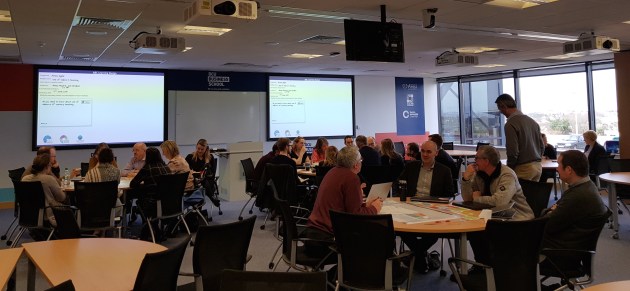

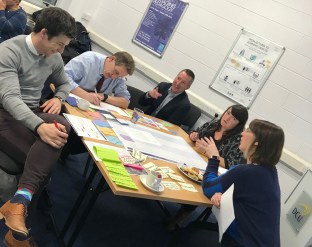 At DCU we have adapted the ‘classic’ materials to suit important strategic priorities such as flexible learning modes, enhanced feedback mechanisms, and Universal Design for Learning (UDL). Furthermore, by using the approach with several teams, evaluating it, and learning how different aspects perform on the ground, we hope to continue to develop our own expertise in using the approach in different contexts. We also plan to do our bit to promote conversations amongst the Irish learning design community about using and tailoring the method to optimum effect.
 Digital Learning Dispatches