
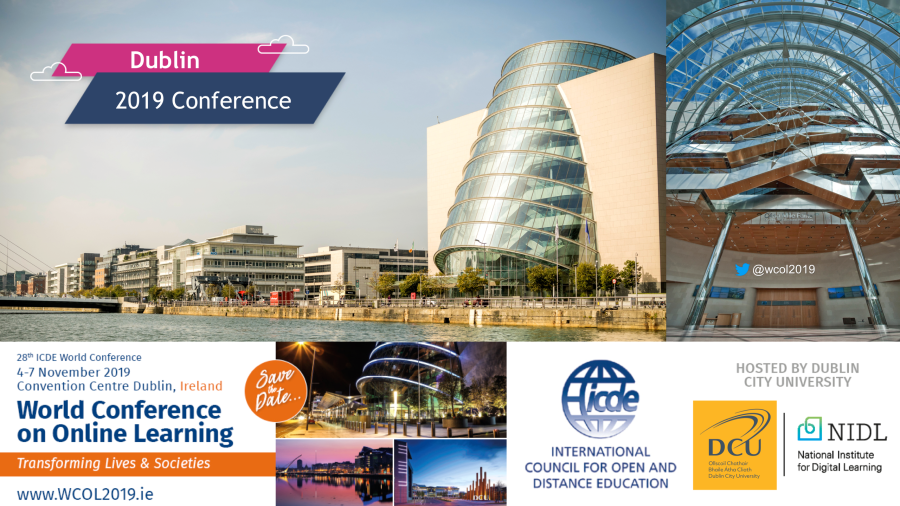
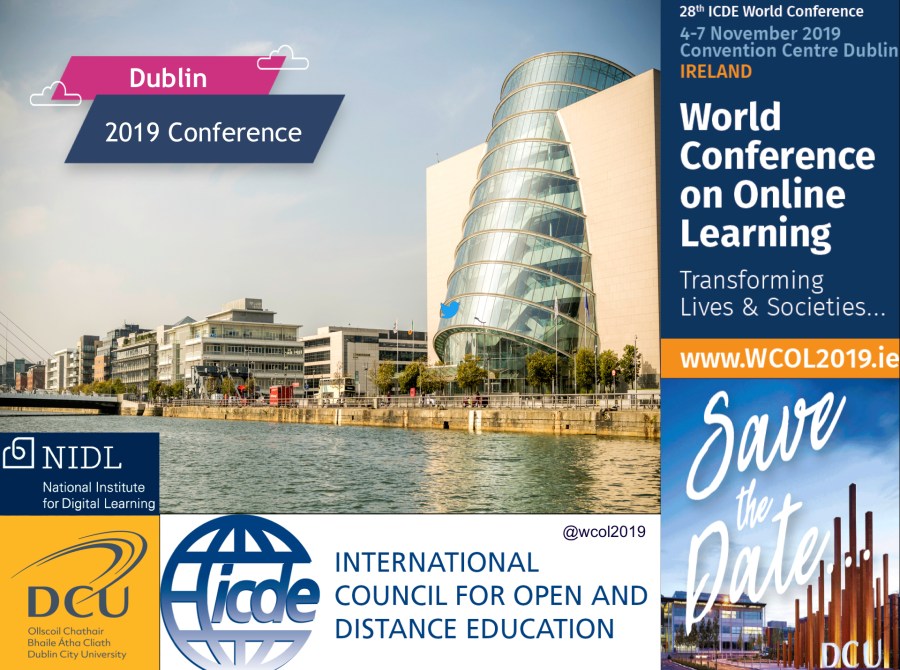
Ireland’s reputation as a digital frontrunner continues to grow with news that Dublin City University (DCU) has been selected by the International Council for Open and Distance Education (ICDE) to host the 2019 World Conference on Online Learning. Held every second year the World Conference is the largest and most prestigious international event exploring new open, online and flexible models of education.
Gard Titlestad, ICDE Secretary General, reports, “DCU submitted an outstanding case to host the 28th ICDE World Conference, which in November 2019 will attract to Dublin the world’s leading scholars, researchers, innovators, policy-makers, industry partners and practitioners working in the field”.
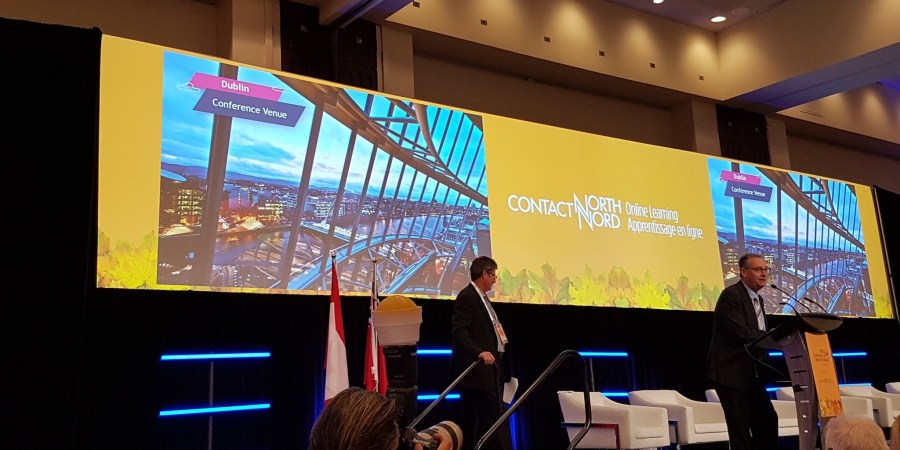
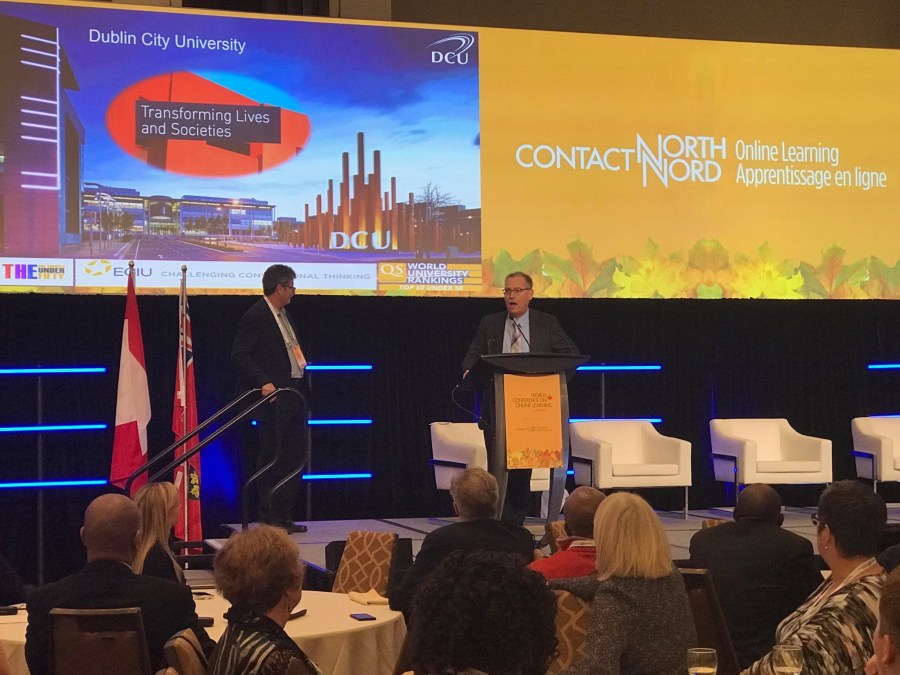
DCU’s success in winning the rights to host the 2019 event was formally announced on Thursday in a presentation to over 1400 delegates from 96 countries during the closing ceremony at this year’s World Conference in Toronto. The announcement was marked earlier in the day by an official signing ceremony, which notably was sealed by the DCU delegation sharing a glass of Irish Whiskey with the Secretary General and members of the ICDE team.

Professor Mark Brown, Director of the National Institute for Digital Learning (NIDL), and 2019 World Conference Chair says, “Our successful bid in hosting the World Conference with a theme of Transforming Lives and Societies is recognition of DCU’s leadership and growing international reputation in the area of online learning”.
As Professor Anne Looney, Executive Dean of DCU’s Institute of Education, Ireland’s largest teacher education provider, reports, “DCU has a strong team working in the field of digital learning and is committed to opening access to education and providing opportunities for life-long learning through new digital technologies”.
Global demand for online part-time study continues to grow internationally, with currently over 6 million students in the U.S alone estimated to be completing some of their degree online. Professor Brown notes, “In Ireland, despite the current restrictive funding model, the demand from part-time mature students for more online and flexible learning pathways continues to increase as people look to earn as they learn”. This year DCU accepted a record number of new registrations for online degree programmes offered through the DCU Connected platform.
Professor Brown reports that more than 60 million learners worldwide registered for a free Massive Open Online Course (MOOC) in 2016, and this figure is expected to continue to grow over the next few days. Notably, DCU will be launching its first official MOOC in 2018 on Irish Language and Culture through the FutureLearn platform. This MOOC initiative is part of the Fáilte ar Líne – Welcome on Line project supported by the Irish Government under the 20 Year Strategy for the Irish Language.
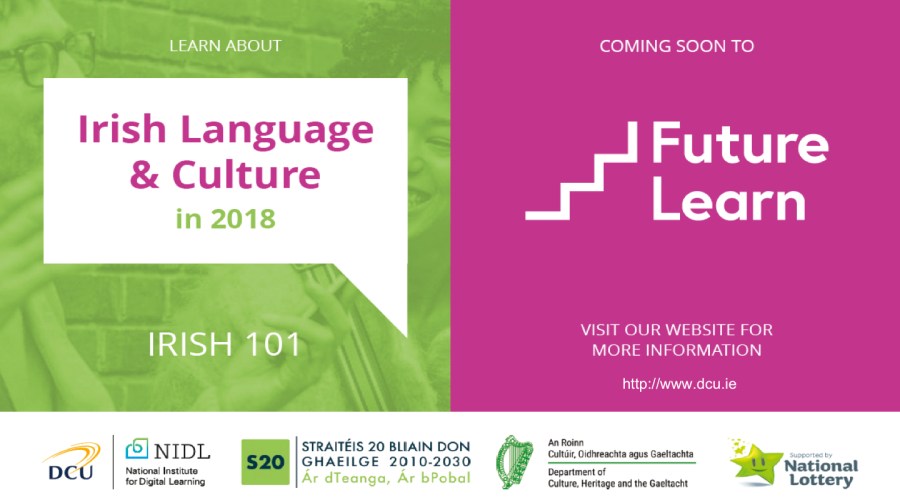
Associate Professor Mairéad Nic Giolla Mhichíl, Head of the NIDL’s new Ideas Lab leading this collaborative initiative between FIONTAR & Scoil na Gaeilge says, “Further MOOCs are planned over 2018 as DCU looks to innovate in new models of online learning and to provide access to engaging, learning opportunities to people living throughout Ireland, and beyond”.
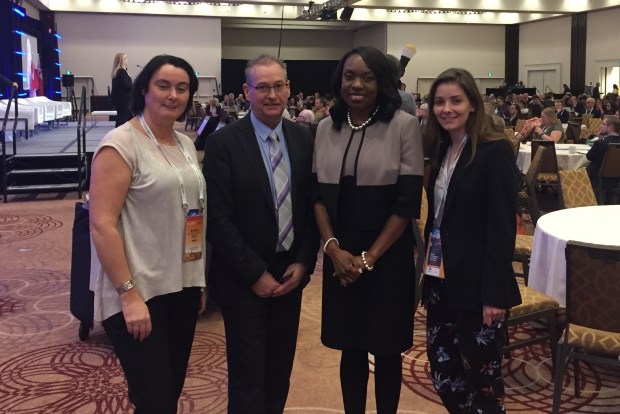
DCU’s commitment to promoting the Irish language and widening access to life-long learning was discussed at this year’s conference in Toronto with Hon Mitzi Hunter, Minister of Education, and further recognised at this year’s World Conference, with Professor Brown’s appointment by ICDE as a Global Ambassador for Open Educational Resources.
According to Professor Brown the World Conference in Dublin will provide an excellent platform to showcase both Ireland’s innovation in digital learning and global reputation in the IT sector. He says, “DCU is looking forward to working with both major industry partners and the Irish Education sector in staging such a significant world event in Dublin”.
DCU would like to acknowledge the support of Fáilte Ireland and Happening Conferences and Events in the preparation of its successful bid against other competition to host the World Conference. More information about the 28th ICDE 2019 World Conference on Online Learning will be available from the following website:

 Digital Learning Dispatches