This short blog post traces the history of the (e)portfolio drawing on a recent publication. It recognises that…
The portfolio is now an ubiquitous assessment in higher education, but asks where does it come from?
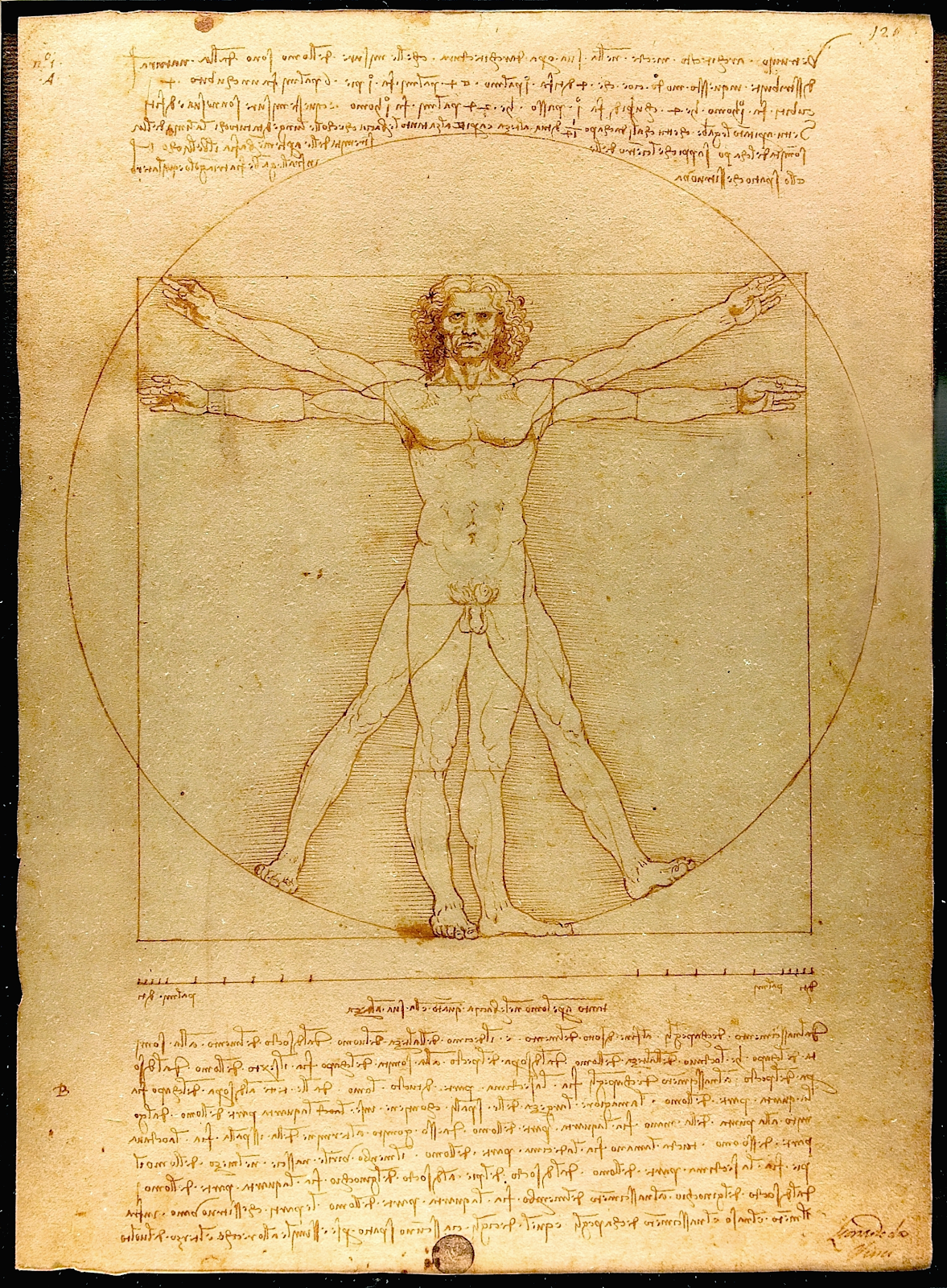
The word portfolio’s etymology derives from the Italian word portafoglio. This was a case or folder for carrying loose papers and pictures. The portfolio concept has its origins in Renaissance Italy, where artists and architects collated examples of their work. One early example of a historical portfolio from the Renaissance time are the notebooks of Leonardo da Vinci. These notebooks were loose folios, later bound together as books.
The Vitruvian Man, one of Leonardo’s Folios. (Source: Wikimedia Commons)
Over time the meaning of portfolio has evolved from its origins as a case for holding loose papers to other contexts such as finance, government and education. Portfolios have evolved from paper to electronic, from local networks to the world wide web.
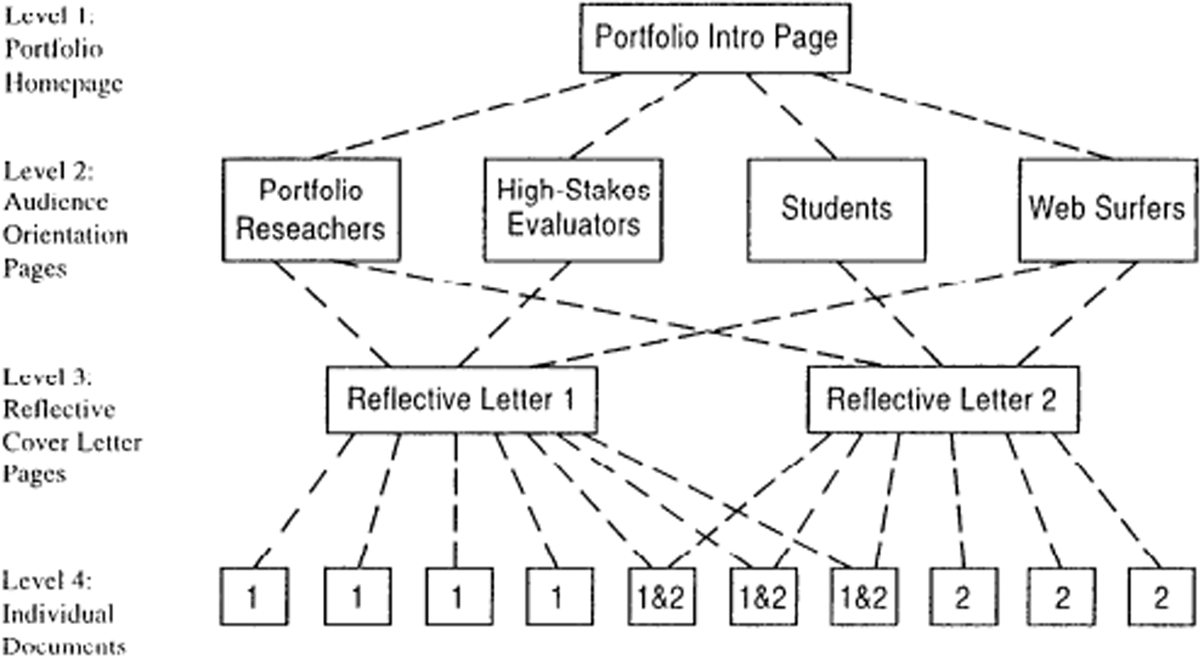
Conception of a portfolio on the world wide web, Watkins (1996: 224)
The decade from 2000–2010 was a period when digital technology began to have a wider impact on our everyday lives and educational technology became part of mainstream higher education. The growth of portfolios was a part of this post millenium EdTech movement, with initiatives spread around the world. A shift in focus has occurred in eportfolio research and practice in the last decade; there has been more emphasis on pedagogy and student learning and less focus on digital technology as it became ubiquitous.
It’s a statement of fact that the Covid-19 pandemic forced the higher education system to swiftly go online, and to reimagine assessment. Alternative assessment approaches such as use of eportfolio, blogs, online presentations, wikis, podcasts, and videos became mainstream or the new normal in the blink of an eye. However, the question is…
Will this shift in higher education thinking towards alternative assessment such as use of eportfolio become permanent after the pandemic?
This question will be answered in time, but if you would like to learn more about how the concept of portfolio in higher education evolved and lessons that can be learned for the future, then we invite you to read this recent journal article.
Full article
Farrell, O. (2020). From Portafoglio to Eportfolio: The Evolution of Portfolio in Higher Education. Journal of Interactive Media in Education, (1), p.19. DOI: http://doi.org/10.5334/jime.574
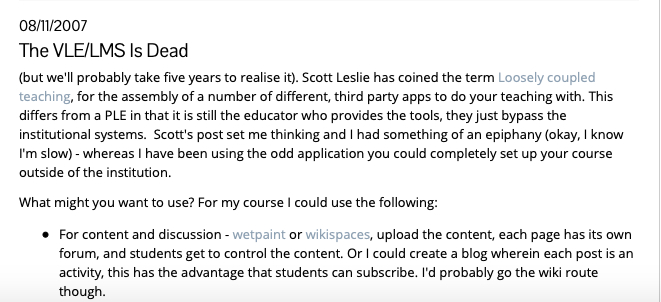
The VLE is dead. This is what Martin Weller, leading “EdTech” expert, blogger and Professor at the UK Open University, said of the Virtual Learning Environment (VLE) in 2007. Coming at a time when the role of VLEs in higher education was a topic of intense debate, the statement provoked a memorable discussion in the history of EdTech. This debate has resurfaced from time-to-time over the years, particularly in relation to the dominance of the VLE in our educational institutions and the language we use to describe this type of learning technology platform.
In order to make the most of the literature available, including non-traditional grey literature accessible through the Internet, the study drew on metaphors taken from books and journals as well as blogs and social media — including a Twitter thread.
the team of researchers argued that either/or debates are simplistic and do not do justice to the nuances of understanding the development of what has become a ubiquitous educational phenomenon, especially in wake of the Covid-19 pandemic.
Metaphorical Concepts
The six organising metaphorical concepts introduced are Straitjacket, Behemoth, Digital Carpark, Safe Space, Smorgasbord, and Pathfinder. Here’s a quick summary of each.
“Image by Dmitry Abramov from Pixabay
Straitjacket, or physical boundedness
Metaphors: “classroom with seats bolted to the floor”, “walls”, “silos”, “one size fits all”, and “bus”.
Description: Views the VLE as constrictive to the lecturer and/or student and impedes personalised learning. The argument is that access to learning is generally limited to those who have institutional access.
Behemoth, or industrial hegemony
Metaphors: “Any colour you like as long as it’s Blackboard”, “Undead Vampire”, “Blackborg”, “Shark”, “Zombie”, “Minivan”, and “Baby Clothes”
Description: Views the VLE industry as oligopolistic and restrictive in that it limits our choice and understanding of what we think a VLE is.
Digital Carpark, or content dumping
Metaphors: “Electronic Filing Cabinet”, “Supermarket Training Wheels”, and “Fast-food Kitchen”
Description: This group views VLEs as a place where online teaching content is simply dropped into, rather than as places of potential learning and interaction — a takeaway service of sorts.
Description: This concept views the VLE as a supportive environment, regarding the closed nature of interaction and communication as a positive. Its provision of access to library and information systems for non-traditional students is seen as improving participation and inclusion.
Smorgasbord, or multi-functionality
Metaphors: “School”, “Airport”, “Kenwood Chef”, “Closet”, and “Swiss Army Knife”
Description: This concept emphasises the multi-functionality of the VLE in its offerings, despite the fact that most users do not make the most of its potential.
Description: This concept views the VLE as a pioneer in ed-tech as it lays the basis for future innovation in the sector — the first settler of sorts. It characterises the VLE as a “trojan mouse” in that it establishes itself as a pathfinder in education, but subtly.
Drawing on these metaphors the authors conclude that…
“Facing into a drastically changed education landscape, one can only speculate what metaphors will emerge in the wake of the COVID-19 pandemic. Through this historical analysis of VLE metaphors we hope to provide an opportunity to reflect on historical developments and contribute to the ongoing conversations around technology enhanced teaching and learning.”
Here is the citation for the full article which we encourage other people to read and reflect on as we consider and start to think more deeply about the future of online, blended and hybrid learning, and more specifically the next generation of the VLE, in the post Covid-19 digital-era:
Farrelly, T., Costello, E. and Donlon, E., 2020. VLEs: A Metaphorical History from Sharks to Limpets. Journal of Interactive Media in Education, (1), p.20. DOI: http://doi.org/10.5334/jime.575




 Digital Learning Dispatches
