
The first meeting for an exciting new Erasmus+ funded project was recently held at the University of Graz, Austria with project collaborators from Aalborg University, Denmark and Dublin City University, Ireland (DCU). The DCU/NIDL research team involves Eamon Costello, Mark Brown, Orna Farrell, Enda Donlon and Prajakta (Lily) Girme.
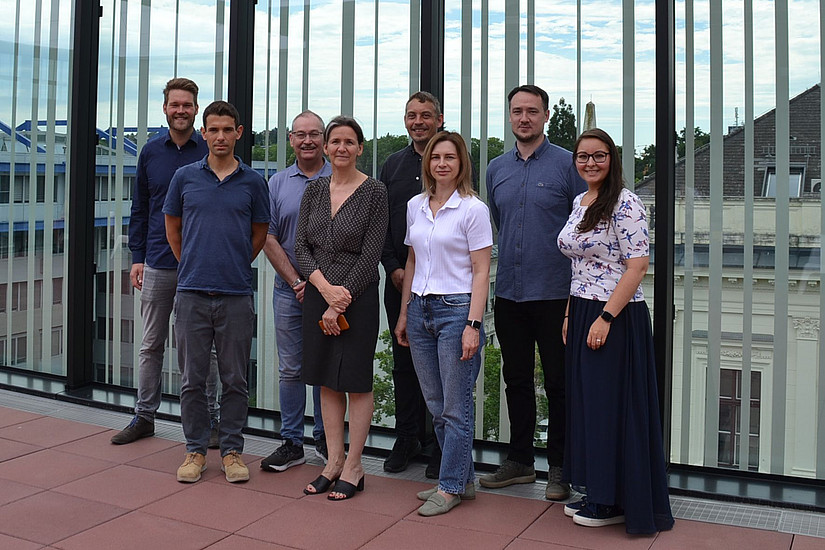
Mark represented DCU at the kickoff meeting (pictured above). At the core of the “Hacking Innovative Pedagogies: Digital Education Rewilded” (HIP-DER) project is the goal of re-imagining traditional models of higher education. The project responds to the challenges of building a more equitable and inclusive digital society and emphasises the transformative role higher education can play in developing more active, digitally competent and diversity-minded European citizens.
The project aims to rethink how to use new digital technology in more creative ways that support transformative pedagogical approaches. Such approaches in this project have an underlying philosophy of listening, responding and co-creating with networked communities of teachers and students and do so in innovative ways that attempt to ‘rewild’ traditional models of pedagogy (Macgilchrist, 2021; Carver, et al., 2021; Ryberg et al., 2021). By rewilding we mean processes that start by unbundling or substituting traditional structures, objects and practices with ones that are more native, fit-for-purpose and transformative to a given environment.
While the concept of ‘rewilding’ is open to conjecture, it reflects a response to the growth of “Big EdTech”, the way institutions have centralised their digital infrastructure at the expense of local innovation and assimilated new technology into traditional ways of teaching, habitats of learning and narrow channels of assessment.
The project team will produce several outputs, including:
• Insights report on current practice
• A framework for rewilding digital learning ecologies
• Compendium of innovative practices
• Hacking innovative pedagogies MOOC
• Guidelines for hacker pedagogy
The DCU team look forward to welcoming our project collaborators from Graz and Aalborg to Dublin in December for the next project meeting and progressing the project’s aims (although the Austrian hospitality of the first meeting will be hard to match).
Stay tuned and find our more:
The project website is currently a work in progress but more information about HIP-DER will be added over the coming months. You can also catch the DCU NIDL team members at the upcoming EADTU’s Innovating Higher Education Conference 19-20th October 2022 in Athens where we will present on our work to date. Contact Eamon Costello <eamon.costello@dcu.ie>, the project lead, if you are interested in learning more about DCU’s work in this space and how we could work with you in hacking innovative pedagogies.
References
Carver, S., Convery, I., Hawkins, S., Beyers, R., Eagle, A., Kun, Z., … & Soulé, M. (2021). Guiding principles for rewilding. Conservation Biology, 35(6), 1882-1893. https://doi.org/10.1111/cobi.13730
Macgilchrist, F. (2021). Rewilding technology. On Education. Journal for Research and Debate, 4(12). https://doi.org/10.17899/on_ed.2021.12.2
Ryberg, T., Davidsen, J., Bernhard, J., & Larsen, M. C. (2021). Ecotones: a Conceptual Contribution to Postdigital Thinking. Postdigital Science and Education, 3(2), 407-424. https://doi.org/10.1007/s42438-020-00213-5


 Digital Learning Dispatches