Over the past month Mark Brown, Director of the National Institute for Digital Learning (NIDL) at Dublin City University, has published a series of three invited opinion pieces on the theme of Digital Literacies through ASCILITE‘s blog known as TELall. 
The first of these posts is republished below, with links at the bottom to the second and third pieces available directly on the ASCILITE blog. Mark stresses these opinion pieces are very much works in progress, as he shapes up a more crafted paper on this theme for publication in a relevant academic journal.

A Critical Review of Frameworks for Digital Literacy: Beyond the Flashy, Flimsy and Faddish
By Professor Mark Brown
The simple fact is that digital literacy is now essential for successfully living, learning and working in today’s increasingly digitalized society and knowledge economy. This fact is the new reality of life in the 21stCentury. As a recent UNSECO report states:
Digital technologies now underpin effective participation across many aspects of everyday life and work. In addition to technology access, the skills and competencies needed to make use of digital technology and benefit from its growing power and functionality have never been more essential (Broadband Commission for Sustainable Development, 2017a, p.4).
The following three-part opinion piece for the ASCILITE blog focussing on different conceptions of digital literacy is firmly anchored in the above assertion. It should be noted that this piece is a working draft in progress of an academic paper on this topic and therefore welcomes feedback. In comparing and contrasting a number of popular and recently proposed digital literacy frameworks the discussion seeks to untangle some of the facts from the fiction. The intention is to peel away, uncover and expose the danger of inadvertently promoting half-truths and even false knowledge when uncritically accepting and implementing such models and frameworks at face value. In this respect the discussion explores the often unspoken underbelly of the digital literacy movement.

Figure 1: Representation of Digital Intelligence (World Economic Forum, 2016)
A Messy construct
The central thesis of this opinion piece is that what we define or understand as digital literacy is messy and far more problematic than reflected in most of the current flashy, flimsy and faddish frameworks. The above model produced by the World Economic Forum (2016) is just one example (see Figure 1) of many in the popular literature which attempt to present the different dimensions of digital literacy—in this case the concept of digital intelligence—in a visually attractive format. However, typically most of the flashy matrixes, wheel charts and multi-dimensional diagrams that on first impressions may look easy on the eyes do not explicitly address the fundamental question of trustworthiness.
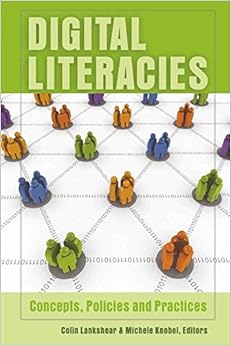 As Lankshear and Knobel (2008) wrote in their seminal book on the topic, ‘the most immediately obvious facts about accounts of digital literacy are that there are many of them and that there are significantly different kinds of concepts on offer’ (p.2). For this reason it helps to talk of digital literaciesrather than limit our thinking to a singular all-inclusive definition. It also needs to be noted, as illustrated above, the language of digital literacies in both the popular and more scholarly academic literature is often described using different terms—such as, digital skills, digital fluency, digital capabilities, digital competencies, digital intelligence, and so on. Therefore, the differing nomenclature makes the search for a commonly agreed definition or understanding of digital literacies even more elusive.
Set against this messy backdrop three core threads are woven throughout this critical discussion about what it means to be digitally literate in the 21st Century. Firstly, the definition of literacy in whatever form is inherently political. Secondly, the digital literacies movement is complex and most efforts to propose definitions and develop related models and frameworks are disconnected from wider socio-political debates and underestimate the importance of the situated nature of educational practice. Lastly, most models and frameworks for digital skills, literacies or competencies fail to adequately address some of the powerful macro-level forces, drivers and entangled and contradictory discourses associated with the goal of preparing more digitally skilled learners, workers and citizens. With these points in mind the overarching message to take from the discussion is that the digital literacy movement cannot be separated from deeper ideological and philosophical questions concerning the nature of the good society and the purpose of the education system. Put more simply, digital literacies have relatively little to do with mastering specific keystrokes.
What are digital literacies?
The above mentioned UNSECO report states there is no one set of agreed definitions for digital literacy, ‘with the literature referring variously to digital ‘skills’, ‘competencies’, ‘aptitudes’, ‘knowledges’, ‘understandings’, ‘dispositions’ and ‘thinking’ (Broadband Commission for Sustainable Development, 2017a, p.23). In a brief review and comparison of the literature, the All Aboard (2015) project, funded by the Irish National Forum for the Enhancement of Teaching and Learning in Higher Education, identified over 100 models and frameworks which to greater or lesser extent purport to encapsulate the various dimensions of digital skills, literacies or competencies. It follows that there is no simple answer to the question of ‘what do we mean by the term digital literacies?’ Therefore, in the second part of this discussion, we will explore this question in more depth by comparing and contrasting a handful of better-known models and frameworks. You will learn that not all frameworks are created equal and there is an inherent flaw or at least serious limitation in the way they frame digital literacies.
References
All Aboard. (2015). Towards a National digital skills framework for Irish higher education: Review and comparison of existing frameworks and models. Available at http://allaboardhe.org/DSFramework2015.pdf
Broadband Commission for Sustainable Development. (2017a). Working group on education: Digital skills for life and work. Available from http://unesdoc.unesco.org/images/0025/002590/259013e.pdf
Lankshear, C., & Knobel, M. (Ed.) (2008). Digital literacies: Concepts, policies and practices. New York: Peter Lang Publishing Inc.
World Economic Forum. (2016). 8 digital skills we must teach our children. Available from https://medium.com/world-economic-forum/8-digital-skills-we-must-teach-our-children-f37853d7221e
Follow up posts…
• Link to Part 2 on Digital Literacies
• Link to Part 3 on Digital Literacies



 Digital Learning Dispatches