
By Professor Mark Brown
For over a decade we have been told that today’s universities are at risk of preparing a generation of students for jobs that don’t yet exist using out-of-date teaching methods and old learning technologies. In a similar vein, we often hear claims from respected international agencies and generally trusted academic sources that 65% of jobs of the future have yet to be invented. This claim, for example, is prominent in Professor Cathy N. Davidson‘s 2011 book Now You See It on the future of education, which The Atlantic reviews. And more recently in the context of the perceived disruptive potential of robotics and Artificial Intelligence (AI) we are being challenged by a new threat that many jobs will disappear in the future.

It follows that such claims raise important questions in today’s rapidly changing world about the currency, relevance and usefulness of completing a university degree. Does a university qualification still matter? This basic question leads to a number of deeper questions: How seriously should we take predictions of the future? Should we be alarmed by some of the claims about the future of work? Are our current jobs safe? Although it is easy to be seduced by the hype shaping projected technology-infused imaginary of the future, the question is just how accurate are these predictions? What is their factual basis? What is the evidence behind the predicted obsolescence of many traditional jobs? Does a university degree help to future-proof your job? More to the point, especially in the context of the increasing costs of higher education, is a degree still relevant in today’s rapidly changing world?
You can read more of this article on Professor Mark Brown‘s Linkedin account.
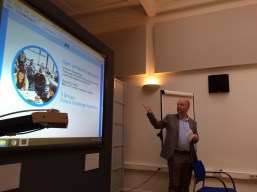 It was developed by Professor Mark Brown and Fred de Vries with the aim of supporting the needs of both experienced and new and emerging institutional leaders responsible for a variety of open, online and flexible learning initiatives in higher education. Previously Mark has contributed as a faculty member to the Institute for Emerging Leaders in Online Learning offered by the Online Learning Consortium in the United States as well as a similar programme in Australia.

 The programme is designed to promote strategic thinking in the context of a number of wicked problems facing higher education and explore future scenarios for preferred new and emerging models of teaching and learning. As the two different EOLLA programmes offered this year demonstrate there are benefits of working with a single institution but equally when participants can learn from each other across institutions.
 Digital Learning Dispatches