A Strategic Reflection on Digitalisation in Higher Education – Webinar Recordings

Over the past fortnight the NIDL team was pleased to contribute to two webinars offering strategic reflections on the increasing digitalisation of Higher Education. This two-part webinar series was part of the Digi-HE project being led by the European Universities Association (EUA). The project aims to promote critical self-reflection in supporting institutions to develop their capacity and strategic approaches to digitally enhanced models of teaching and learning.

In the next phase of this project, a number of Thematic Peer Groups (TPGs) will get underway shortly involving around 30 different higher education institutions across Europe. We were delighted to have some many institution al applicants for this phase of the project. The TPGs will enable participants at each institution to engage in regular lively discussions and share their experiences relevant to the chosen theme related to digitalisation in the context of teaching and learning. The selected themes include:

  • Curriculum and Assessment
  • Strategy and Organisational Culture
  • Strategic and International Partnerships

We look forward to meeting up with a diverse group of participants in this next phase of the project. However, before then the following recordings kindly made available by EUA may be of interest to those who were unable to join our recent webinar series.

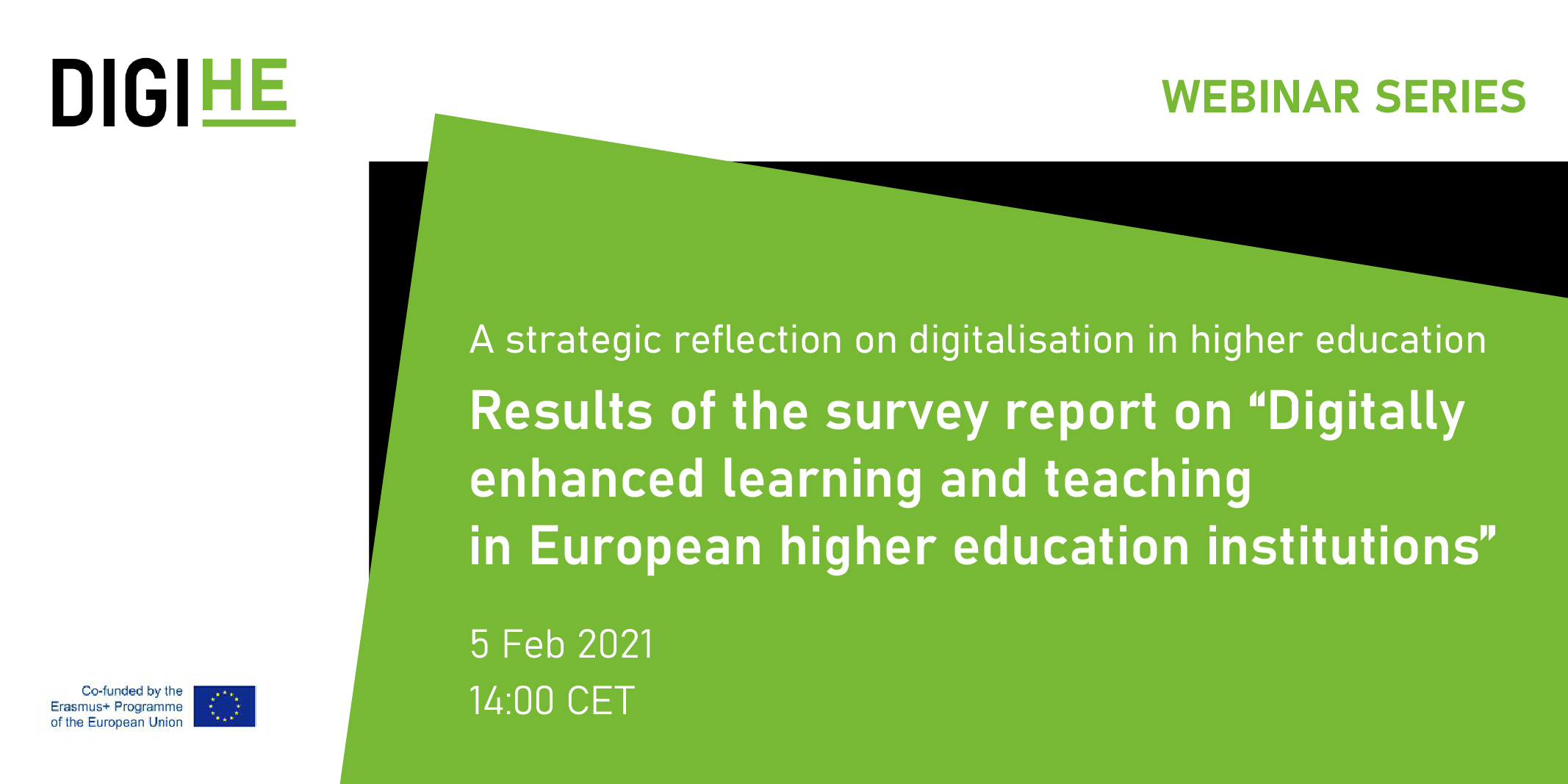
In reverse order, the second webinar which took place on Friday 5th February (recording above) discussed the findings of our report which presents the results of a survey of digital learning and teaching in European higher education institutions.

One of the key takeaways from the survey in terms of supporting teaching with new digital technologies is the value of an environment that fosters rich professional conversations with and between colleagues.

The first webinar back on January 26th (recording below) explored the question, what does digital education look like from an institution-wide perspective when successfully implemented in a mature way? This webinar coincided with the launch of another Digi-HE project report focusing on the development of a high performance digital education ecosystem. The report provides advice and guidance for higher education institutions wishing to undertake self-assessment of digital learning and teaching using selected instruments reviewed as part of this study.

if you have any questions about the Digital-HE project or anything arising from the two webinars, then please do not hesitate to contact us. The project team meets regularly and we would be happy to provide further advice concerning the range of self-assessment tools reviewed for fostering a culture of strategic reflection and quality enhancement.

A Strategic Reflection on Digitalisation in Higher Education – Webinar Series

We are pleased to share news of this two-part webinar series inviting strategic reflections on the increasing digitalisation in higher education. The series is organised by the European Universities Association (EUA) drawing on the findings of two major reports under the DIGI-HE project and is part of the European Learning & Teaching pre-Forum activities. The aim of this three-year Erasmus+ co-funded initiative, which the NIDL is an active partner, is to support European higher education institutions in enhancing their strategic approaches to digitalisation. 

You can read more information below about each webinar and find further details on the panel discussion, soon to be launched reports and registration links on the dedicated page for this event.

Webinar 1: Developing a high-performing digital education ecosystem: institutional self-assessment instruments

Digitally enhanced learning and teaching is now a common feature of the European higher education landscape, but how do higher education institutions develop and enhance their strategic approaches to digitalisation, and ensure they are fit for purpose? The first webinar of this series will explore the use of self-evaluation instruments, such as HEInnovate, DigCompOrg and ACODE Benchmarks, as a way to develop a high-performance digital education ecosystem. It will present the results of a report that gathered and analysed 20 digital self-assessment instruments and provide advice to higher education institutions wishing to use them. The report is the product of a six-month desk research venture during which each instrument was evaluated and peer reviewed on an established set of criteria by members of the DIGI-HE consortium.

During the webinar, speakers will:

  • present the overall findings of the review of the various tools and frameworks;
  • provide advice on how to approach an internal self-evaluation by using a self-assessment tool or framework;
  • discuss the methodology behind the selection of instruments and the review process.

Webinar 2: Results of the survey report “Digitally enhanced learning and teaching in European higher education institutions”

This second webinar of the series will explore the results of the report “Digitally enhanced learning and teaching at European higher education institutions”. The report is based on the findings of a survey of higher education leadership across the European Higher Education Area from April to June 2020. It gathered 368 responses from 48 countries.

The webinar will offer insight into the strategic uptake of digitalisation in higher education institutions before the Covid-19 crisis, but also some of the changes that have occurred over the last year. Due to a similar study in 2014, and questions on digital learning in the EUA Trends Reports from 2015 & 2018, some longitudinal data will also be presented.

During the webinar, speakers will:

  • reflect on the survey findings in national and European contexts, also in view of the EU Digital Education Action Plan (2021-2027) and its goals;
  • discuss what is needed to ensure that higher education institutions are fully equipped to provide sustainable and high quality digitally enhanced learning and teaching to students throughout the EHEA in a post-Covid world.

Do you want to learn more?

As part of the DIGI-HE project we also have a call open for participation in a number of thematic peer groups with a digitally-enhanced learning and teaching focus. Three thematic peer groups will be supported in 2021 based on the level of interest in several themes. Expert facilitated peer groups provide a valuable opportunity for European higher education institutions to share and exchange information with colleagues about their strategic approaches to digital education. Under this call, around 20 institutions will be selected. 

The deadline for applications is 29th January 2021, click here for more information.