A Strategic Reflection on Digitalisation in Higher Education – Webinar Recordings

Over the past fortnight the NIDL team was pleased to contribute to two webinars offering strategic reflections on the increasing digitalisation of Higher Education. This two-part webinar series was part of the Digi-HE project being led by the European Universities Association (EUA). The project aims to promote critical self-reflection in supporting institutions to develop their capacity and strategic approaches to digitally enhanced models of teaching and learning.

In the next phase of this project, a number of Thematic Peer Groups (TPGs) will get underway shortly involving around 30 different higher education institutions across Europe. We were delighted to have some many institution al applicants for this phase of the project. The TPGs will enable participants at each institution to engage in regular lively discussions and share their experiences relevant to the chosen theme related to digitalisation in the context of teaching and learning. The selected themes include:

  • Curriculum and Assessment
  • Strategy and Organisational Culture
  • Strategic and International Partnerships

We look forward to meeting up with a diverse group of participants in this next phase of the project. However, before then the following recordings kindly made available by EUA may be of interest to those who were unable to join our recent webinar series.

In reverse order, the second webinar which took place on Friday 5th February (recording above) discussed the findings of our report which presents the results of a survey of digital learning and teaching in European higher education institutions.

One of the key takeaways from the survey in terms of supporting teaching with new digital technologies is the value of an environment that fosters rich professional conversations with and between colleagues.

The first webinar back on January 26th (recording below) explored the question, what does digital education look like from an institution-wide perspective when successfully implemented in a mature way? This webinar coincided with the launch of another Digi-HE project report focusing on the development of a high performance digital education ecosystem. The report provides advice and guidance for higher education institutions wishing to undertake self-assessment of digital learning and teaching using selected instruments reviewed as part of this study.

if you have any questions about the Digital-HE project or anything arising from the two webinars, then please do not hesitate to contact us. The project team meets regularly and we would be happy to provide further advice concerning the range of self-assessment tools reviewed for fostering a culture of strategic reflection and quality enhancement.
All Roads Leading to Micro-credentials: Latest ECIU University White Paper

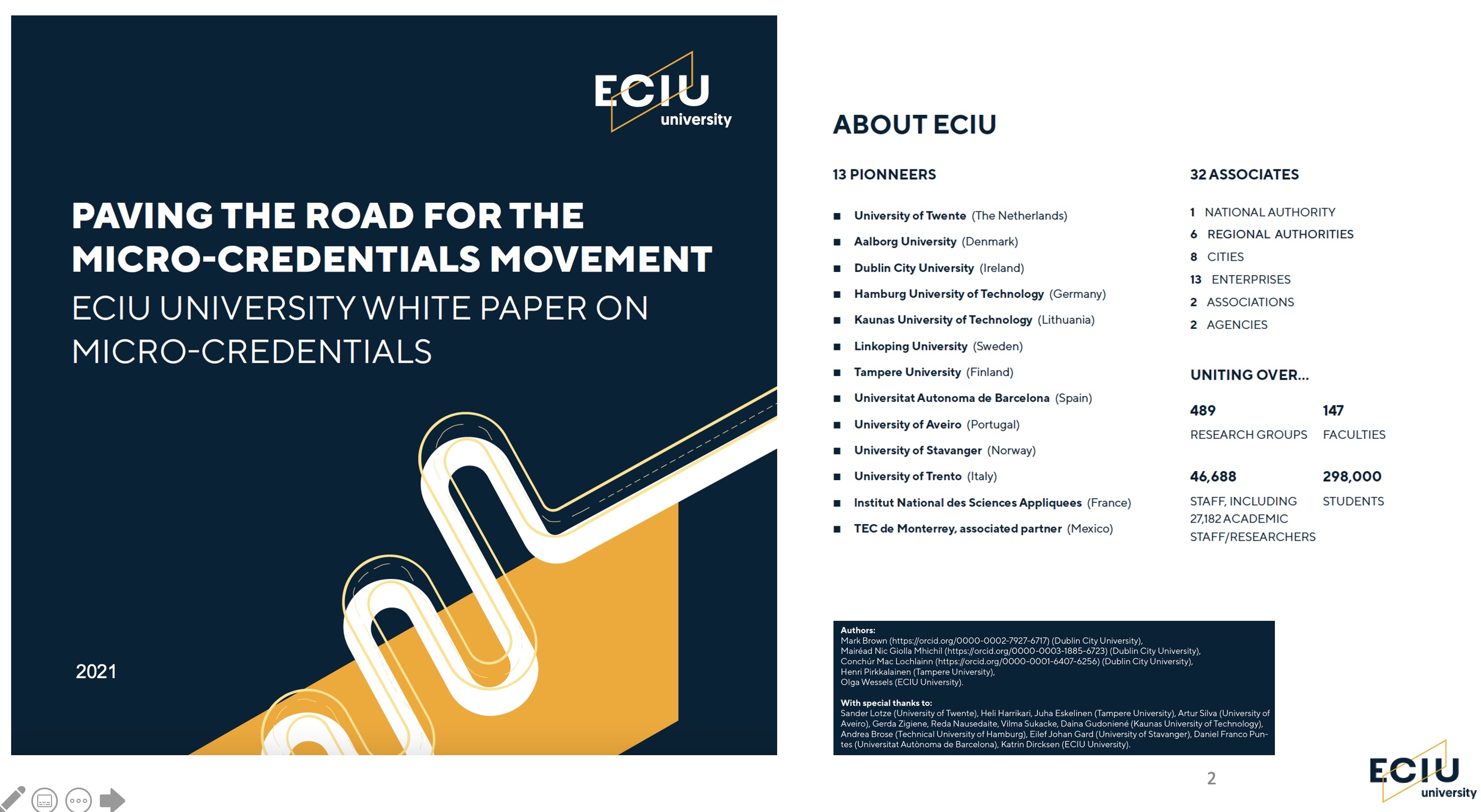
Last week we were pleased to launch a new ECIU University white paper on the rapidly evolving micro-credential movement. This paper, Paving the Road for the Micro-credential Movement’, follows close on the heels of a much anticipated report presenting a European approach to micro-credentials with a related roadmap published in December (Commission Consultation, 2020). A major contribution of this report is a common European definition and language for micro-credentials to address what is acknowledged as a global barrier to wider uptake. 

Video of Launch Event

In April 2020, ECIU University published its first white paper on this topic which identified a number of guiding principles and emphasised the point that micro-credentials should be in the service of big ideas rather than being the big idea itself.

The latest white paper illustrates how the new ECIU University is one of these big ideas with its focus on developing an exciting new co-creation learning ecosystem that connects learners for life.

Micro-credentials are core to the 2030 Vision and concept of developing smart new learning pathways for learners across the ECIU University partners. An implementation roadmap with defined actions across a number of building blocks is also presented in the white paper.

The launch event anchored growing worldwide interest in micro-credentials in a number of competing and consisting drivers, including a trend which is emphasising skills over degrees and the need to urgently address an increasing skills gap due to ongoing digital disruption and the changing nature of work. A focus on developing and recognising transversal skills was also noted along with the global impact of MOOCs. 

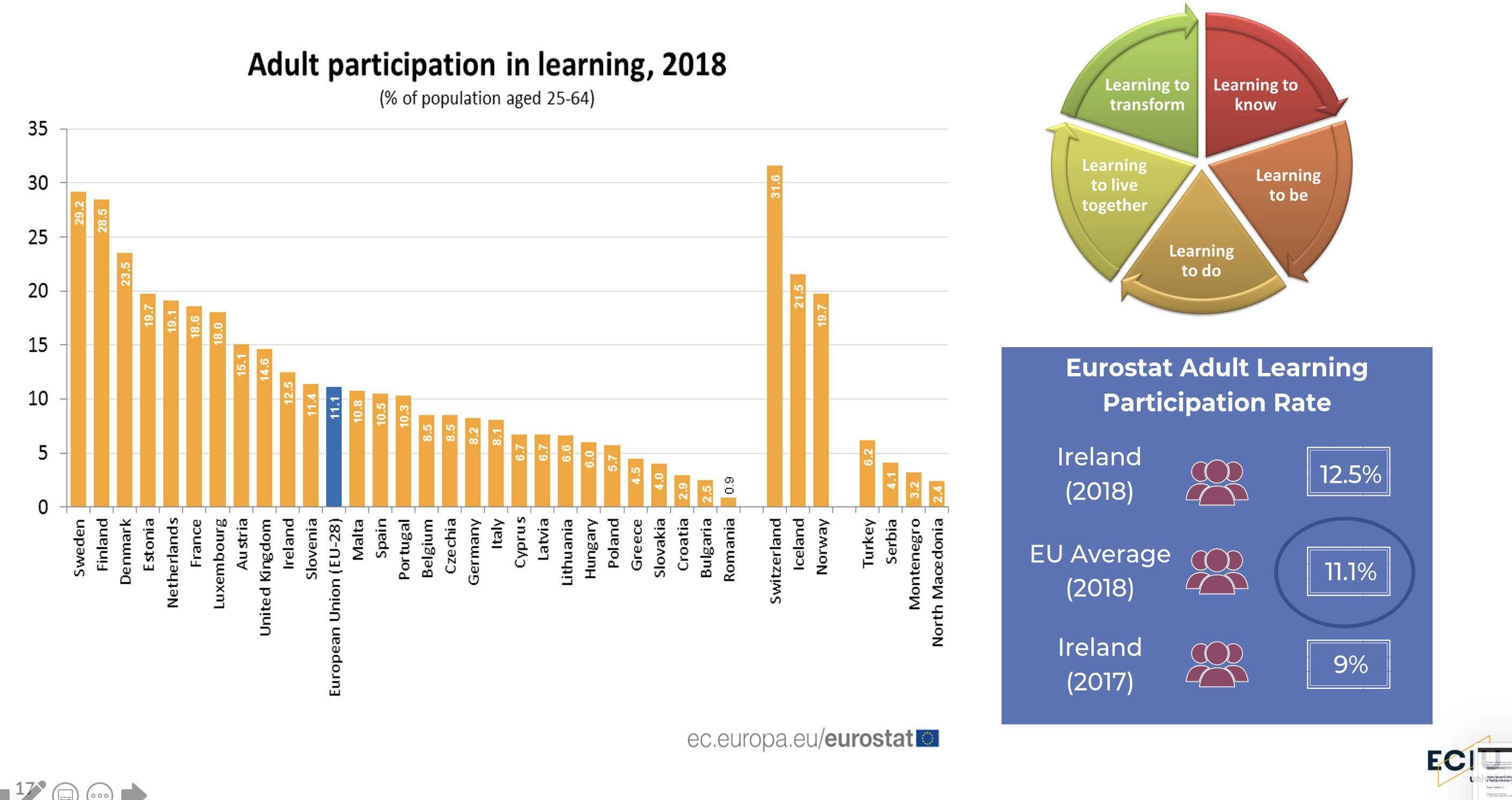
While Neoliberal critiques of the movement were noted the role of different interest groups with competing agenda was claimed to be precisely the reason why educators need to be in the driving seat. After all, one of the most important underlying drivers of the micro-credentialing movement is the need to develop new flexible pathways to address current low rates of life-long learning across Europe. Such pathways may be able to better support the pillars of life-long learning:

  • Learning to be
  • Learning to know
  • Learning to do;
  • Learning to live together
  • Learning to transform

Moreover, the development of micro-credentials can potentially support more agile responses to new and emerging developments and growth areas, such as the European Green Deal and achievement of the Sustainable Development Goals (SDGs). 

Over 300 participants from Europe, and beyond, participated in the virtual launch event, which included presentations from Vanessa Debiais-Sainton, Head of the Unit in charge of Higher Education Policies and Programme at the European Commission. Anthony Camilleri, Director at Knowledge Innovation Centre, Dr Henri Pirkkalainen from Tampere University and Professor Mark Brown. 

In his keynote presentation, Mark shared news of a new online course, “Higher Education 4.0 – Certifying your Future” available later in February through the FutureLearn platform. This course, developed by a NIDL team to support the ECIU University initiative, explores the new skills agenda, the emergence of the micro-credentialing movement and new authentic pedagogies for new times. The course also draws on findings of a National Irish Survey on Micro-credentials that will be published shortly.

This forthcoming report and the latest ECIU University white paper can be found on the NIDL’s Micro-credential Observatory that is regularly updated to provide a comprehensive collection of policy and research initiatives in this burgeoning area.